










 ST-STAFF
.
June 30, 2026
.
Industry News
.
ST-STAFF
.
June 30, 2026
.
Industry News
.
Sponsored
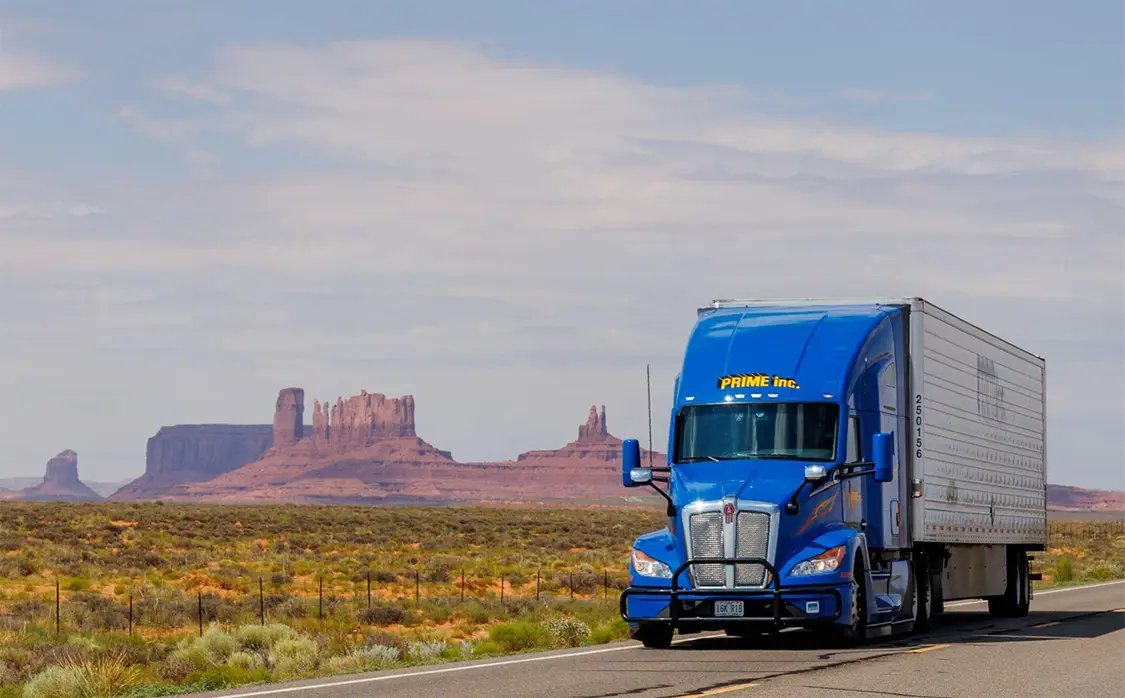
The math is simple and terrifying. A Freightliner Cascadia loaded to 80,000 pounds merging onto I-285 at 55 mph carries roughly 3.2 million foot-pounds of kinetic energy. A rider on a Street Triple doing the same speed weighs in around 900 pounds total—bike, human, gear. That’s 36,000 foot-pounds. When those two objects occupy the same space at the same time, physics doesn’t negotiate.
The rider always loses. But what happens after the collision—the police report, the insurance fight, the medical bills that land six months later—that’s where the real damage compounds. And most of it is avoidable if both sides understand what the other is actually seeing.
This isn’t a sermon about loud pipes or blind spots. It’s about why crashes keep happening in predictable places, why fault gets assigned before the ambulance leaves, and what it takes to come back whole when the cage wins.
Visibility isn’t symmetrical. That’s the part that doesn’t make it onto the bumper stickers.
A Class 8 tractor-trailer has documented blind zones extending 40+ feet in front of the cab, 30 feet behind the trailer, and two full lanes on the right side. Those aren’t estimates. They’re measurements taken with the driver seated at regulation mirror height. A sportbike tucked into the right lane at merge speed doesn’t just disappear—it was never visible to begin with.
But the inverse is also true. A rider filtering up the right side of a semi at a stoplight sees the trailer. They do not see the driver checking the passenger mirror before the turn signal even clicks. They assume the truck knows they’re there because they can see the truck. That assumption kills.
SUVs and crossovers are worse in some ways. The A-pillar on a modern Tahoe or Expedition is wide enough to hide an entire motorcycle at 50 feet. The blind-spot monitoring systems beep for cars; a bike’s radar cross-section is small enough that the sensors don’t always register it. And side mirrors? A GSXR-750 at three-quarter lock disappears completely in the convex glass unless the driver physically leans forward.
The “watch out for motorcycles” bumper stickers don’t change crash curves because they treat visibility like a moral issue instead of a geometry problem. NHTSA’s FARS data shows that 28% of multi-vehicle motorcycle crashes involve a vehicle turning left across the rider’s path. The driver looked. They just didn’t see. The bike was there, in the right-of-way, doing nothing wrong, and the sedan’s brain pattern-matched “empty road” because motorcycles don’t occupy visual space the way cars do.
That’s the physics gap. It doesn’t care who’s right.
Police reports in Georgia carry a default narrative: if a motorcycle is involved, speed and rider behavior go in the first paragraph. Even when the geometry proves otherwise.
Take the I-75/I-285 interchange southbound. It’s a four-lane sweeper with a 50-mph advisory and sight lines obstructed by jersey barriers and overhead signage. A semi changes lanes without signaling. The bike has nowhere to go. The truck driver tells the responding officer he didn’t see anyone. The officer writes “motorcyclist was traveling at a high rate of speed and failed to avoid the collision.”
No pavement scars measured. No EDR data pulled. Just the default story: bikes go fast, riders take risks.
Spaghetti Junction is worse. The I-85/I-285 northeast exchange handles 300,000+ vehicles per day through a knot of ramps that weren’t designed for current traffic volume. Trucks use the leftmost lanes to avoid the right-side merge chaos. Bikes split lanes to stay out of the door zone. When they meet in the middle, the report almost always tags the rider as the primary contributing factor.
Cobb Cloverleaf—the I-75/Highway 120 loop—has claimed enough bikes that the local riding community has a name for the northwest on-ramp: the Meat Grinder. Trucks accelerate downhill into the merge. Bikes coming up the cloverleaf can’t see past the curve. If they meet at the seam, the rider gets cited for “improper lane change,” even though the EDR will show the truck crossed the gore point early.
Insurance adjusters treat motorcycling as an “inherently risky activity,” which is code for contributory negligence baked into the offer. A rider rear-ended at a stoplight by a distracted driver will still see a settlement calculation that assumes 20-30% fault for choosing to ride. It’s not written into the policy; it’s embedded in the adjuster training.
When commercial vehicles are involved, the stakes get higher and the legal requirements change. Federal motor carrier regulations impose black-box data retention, hours-of-service logs, and maintenance records that don’t exist in passenger-vehicle cases. A truck accident lawyer Atlanta who understands FMCSA rules and knows how to pull ECM data before it gets overwritten isn’t a luxury—it’s the difference between a nuisance settlement and a case that actually covers what the crash took. Georgia tort law doesn’t automatically trigger those federal discovery tools; you have to know they exist and demand them early.
The bias problem isn’t malice. It’s pattern recognition trained on bad assumptions. Riders lose before the investigation starts.
Adrenaline is a liar.
A rider gets clipped at 35 mph, slides 60 feet, pops up, waves off the ambulance, and rides the mangled bike home on a bent rim. Two days later they couldn’t lift their arm above shoulder height. Four days later the headache that won’t quit turns out to be a concussion. A week out, the “bruised ribs” are actually fractures that didn’t show on the initial X-ray.
The ER sees blunt-force trauma. They check for breaks, bleeds, and head injuries. If you walk in under your own power and your vitals are stable, you get ibuprofen and a discharge sheet that says “follow up with your primary care physician if symptoms persist.”
What they don’t tell you: soft-tissue damage has a delayed presentation. Rotator cuff tears don’t hurt until the swelling goes down and you try to use the joint. Rib fractures can take 72 hours to declare themselves as the cartilage inflammation peaks. Internal bruising of the kidney or spleen shows up as flank pain and dark urine three days after the crash, not three hours.
And if you refused the ambulance? If you told the officer “I’m fine” at the scene because your bike was still rideable and you just wanted to get out of traffic? That becomes the anchor point in your insurance claim. The adjuster will argue that if the injury were real, you’d have gone to the hospital immediately.
This is where same-day or next-day documentation becomes essential. Even if you walked away, even if you feel fine, getting a documented exam locks in the timeline. Chiropractors, urgent care clinics, and orthopedic specialists who work with accident cases know what to look for. An Atlanta accident injury clinic that sees motorcycle trauma regularly won’t just check range of motion—they’ll document impact points, photograph road rash progression, and note subjective complaints that might not have objective findings yet. That record matters when the insurance company argues six months later that your shoulder injury is pre-existing.
“I’m fine” at the scene becomes “uncompensated” when the medical bills hit. The body keeps score even when the brain doesn’t.
Every commercial truck built after 2000 has an Engine Control Module that logs data. Hard braking. Lane departure. Speed. Throttle position. Hours of service. Some systems capture 30 days of rolling data; others overwrite after 15. Once it’s gone, it’s gone.
That ECM will show whether the truck was doing 68 mph in a 55 zone. Whether the driver hit the brakes 1.2 seconds before impact or never touched them. Whether the rig had logged 11 hours on the road when FMCSA caps the limit at 11 for property carriers and enforces mandatory rest breaks. Whether the last maintenance check flagged a brake-shoe defrost warning that got ignored.
The driver’s statement to the cop is “I didn’t see him.” The black box says he was looking at his phone. Those are different stories.
But the data gets overwritten on a loop. If nobody pulls it within two weeks, the crash sequence is gone and you’re left with whatever the driver told the officer in the moment. Trucking companies know this. The good ones preserve the data as soon as they hear about a collision. The bad ones wait for a subpoena and shrug when the records are already cycled out.
Helmet cams and dashcams used to be hobbyist gear. Now they’re evidence. A GoPro mounted to the chin bar or a Sena with forward-facing video gives you an independent record of the traffic pattern, the sight lines, and the other vehicle’s behavior. It also forces you to ride like someone’s watching, which isn’t a bad thing.
But footage only helps if it’s stored correctly and admitted properly. Most cameras loop-record over old files. If you don’t pull the SD card immediately after a crash, the loop overwrites the collision. And if the video shows you doing 80 in a 65 before the truck cut you off, that becomes evidence against you as much as for you. Court rules in Georgia allow video evidence, but chain of custody matters. The file metadata has to be intact. The timestamp has to be plausible. If you edited it, even to clip out irrelevant footage, the defense will argue tampering.
The black box doesn’t lie. Neither does the helmet cam. That’s the problem and the power.
If you’re still conscious and mobile, here’s what you do:
If you’re the driver and you just hit a rider, stay at the scene, call 911, and shut up. You’re required to render aid and exchange information. You are not required to explain what you think happened. The adrenaline and the guilt will make you want to fill the silence. Don’t. Your insurance company will assign a claims adjuster and possibly a lawyer. Let them talk.
The scene is temporary. The evidence is perishable. The words you say get locked in.
The bike is totaled. Insurance offers you $4,200 because that’s NADA clean retail for a 2016 FZ-07 with 18,000 miles. Your bike had a full Akrapovič system, upgraded suspension, bar-end mirrors, and a custom seat. You’ve got $2,800 in receipts. The adjuster says aftermarket parts don’t add value; they subtract it because “you modified the vehicle.”
That’s the property-damage fight. And it’s separate from the injury claim, which means separate negotiations, separate timelines, separate use points.
Diminished value is real but hard to prove on a motorcycle. A car with a collision history loses 10-20% of resale value even after repairs. A bike? If it’s been down, the frame might be tweaked even if it passed inspection. But Georgia law doesn’t automatically recognize diminished value unless you can prove it with a third-party appraisal, and most riders don’t know to ask.
If your livelihood depends on being able to ride—gig delivery, courier work, freelance production where you haul gear on a bike because parking downtown is impossible—the income loss is real and documentable. But insurance companies treat motorcycles as recreational unless you can prove commercial use with tax records and client contracts. A week off work to heal is one thing. Three months unable to ride because your shoulder won’t take the vibration is another, and the gap between “disability” and “I can’t do my job on two wheels” is where claims go to die.
Then there’s the PTSD gap. You can’t get back on. The sound of a diesel engine accelerating behind you triggers a panic response. You sold the bike because every time you looked at it you saw the SUV’s grille coming at you in the mirror. Insurance doesn’t have a line item for that. Juries sometimes do.
Georgia law allows recovery for “pain and suffering,” which is a broad enough term to include psychological trauma if you can connect it to the crash. A therapist’s notes documenting panic attacks, avoidance behavior, and sleep disruption carry weight. But you have to go to therapy and you have to start soon enough that the records show a clear causal link. Wait a year and the defense argues it’s unrelated stress.
Recovery isn’t linear. The medical part ends when the doctor says “maximum medical improvement.” The financial part drags on until the insurance company decides the file isn’t worth fighting anymore. The psychological part doesn’t end; it just gets managed.
Separate following distance is the least sexy advice and the most effective. Three seconds at highway speed. Count it out. If the car in front of you passes a sign, you should pass the same sign no sooner than “one-one-thousand, two-one-thousand, three-one-thousand.” That’s 264 feet at 60 mph. Most riders run at one second because it feels safe and because traffic will fill the gap if you don’t.
That one-second gap is 88 feet. A car panic-braking from 60 needs 120-140 feet to stop. You need 90-110 because bikes have better braking and worse weight transfer. You’re already inside the stopping distance before your brain registers the brake lights.
Three seconds buys you decision time.
High-vis gear works, but not because it makes you easier to see. It makes you harder to miss when someone is looking. A driver checking their mirror will spot a neon-yellow jacket faster than flat black leather. But if they’re not looking at all, you’re invisible either way. High-vis changes the percentage on the margins. It doesn’t solve the problem.
Positioning in the lane matters more than color. The leftmost third of the lane—the “blocking position”—puts you in the driver’s side mirror instead of the passenger blind spot. It also keeps you out of the oil strip in the center and away from road debris on the right. But it puts you closer to oncoming traffic on two-lane roads and increases the risk of a left-cross collision because drivers turning left see the gap, not the bike.
There is no perfect position. There’s only the least-bad option for the specific threat in front of you.
Truckers who treat every bike like it’s invisible aren’t being paranoid. They’re being realistic. A professional driver checks mirrors every five to eight seconds in traffic. They know the blind zones. They know a bike can cover 200 feet in the time it takes to check the passenger side and come back to the road. If they can’t see you, they assume you’re there and drive accordingly.
That’s not an insult. It’s the only math that keeps both parties alive.
Local advocacy still matters because the infrastructure decisions that kill riders happen in county commission meetings and GDOT planning sessions that nobody attends. Georgia Motorcyclist Rights & Awareness tracks legislation. ABATE chapters push back when cities try to ban lane-filtering or when the state proposes helmet-law changes that sound good in a press release but create enforcement problems on the road. Rider orgs don’t fix the culture, but they move the policy needle a few degrees at a time.
The math changes when both sides stop assuming the other can see them.
It’s eight months after the crash. The rider—call him Mike, 34, self-employed carpenter who used his Ninja 650 to get to job sites because his truck was in the shop more than it was running—is still fighting with the insurance company over physical therapy coverage. The driver of the F-250 that T-boned him at the Whitlock Avenue intersection in Marietta got cited for failure to yield. The police report was clean. Witnesses backed Mike’s version. The truck’s insurance accepted liability in writing.
But “accepted liability” doesn’t mean they’re paying for the PT. They covered the ER visit and the first orthopedic consult. When the doctor recommended twelve weeks of physical therapy for the rotator cuff tear, the adjuster said they’d approve four weeks and reassess. Four weeks came and went. Mike still can’t lift a sheet of plywood overhead without his shoulder giving out. The adjuster says he’s at maximum medical improvement and any further treatment is “maintenance, not recovery.”
Mike’s bike was totaled. He got $3,100 for a machine he bought for $5,800eighteen months earlier. He’s back on the road—bought a used Versys with the settlement check and a loan he didn’t want—but the job sites that require overhead work are off-limits now. That’s $1,200-$1,500 a week he’s not making, and the insurance company’s income-loss calculation stopped the day the doctor cleared him to return to “light duty.”
The driver apologized at the scene. Gave Mike his information without argument, stuck around until the cops showed up, even called two days later to check in. Good guy. Felt terrible. None of that changes the fact that his insurance company is playing the long game, betting Mike will take the $18,000 nuisance offer rather than wait two years for a trial.


Department
Full Seat Replacements The new Cruiser Collection from TMI Products is perfect for the automotive enthusiast who wants modern comfort with a clean and… Continue reading
Chris Hamilton . August 15, 2023

c10
BEST TRUCK OF 2022 THE DECISION IS UP TO YOU! Some incredible trucks had the honor of gracing the cover this year, and we want… Continue reading
Chris Hamilton . December 03, 2022

C10 Builders Guide
What an epic event! Did you watch the live stream? If not, you missed a ton of action and some really great trucks. But don’t… Continue reading
Chris Hamilton . March 01, 2021
Department
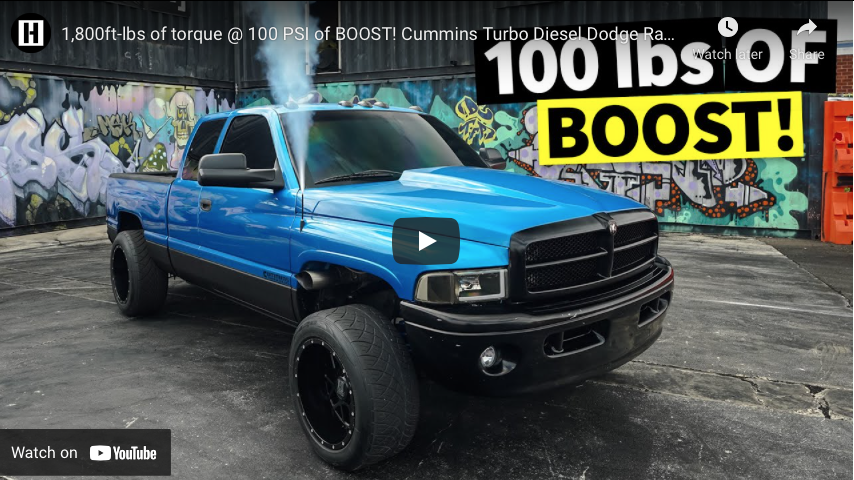
Dakota from @FULL HOOK PERFORMANCE brought out his big blue ’98 Dodge Ram to show off big blue Cummins 5.9L. With the help of a… Continue reading
Adam Johnson . June 07, 2022
Department
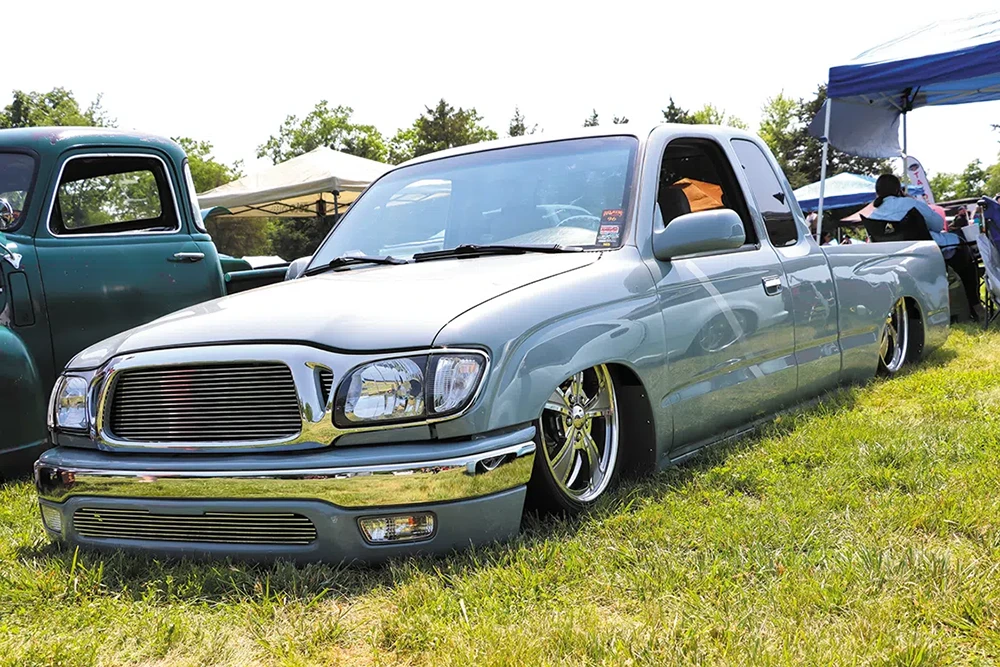
Relaxed Atmosphere Truck Club recently held its 5th Annual Relaxin’ in the Park show at the Larry G. Crites Memorial Park in Festus, Missouri. With… Continue reading
Mike Self . September 18, 2023
Department
GETTING STARTED ON THE 1993 SILVERADO C3500 DUALLY I have always wanted a cool tow rig for my projects, and I have always wanted an… Continue reading
JOSH MCPHERSON . September 18, 2023


We use cookies to enhance your browsing experience, serve personalized ads or content, and analyze our traffic. By clicking "Accept All", you consent to our use of cookies. Visit our Cookie Policy for more info.




Share Link