










 STREET TRUCKS STAFF
.
April 22, 2026
.
Industry News
.
STREET TRUCKS STAFF
.
April 22, 2026
.
Industry News
.
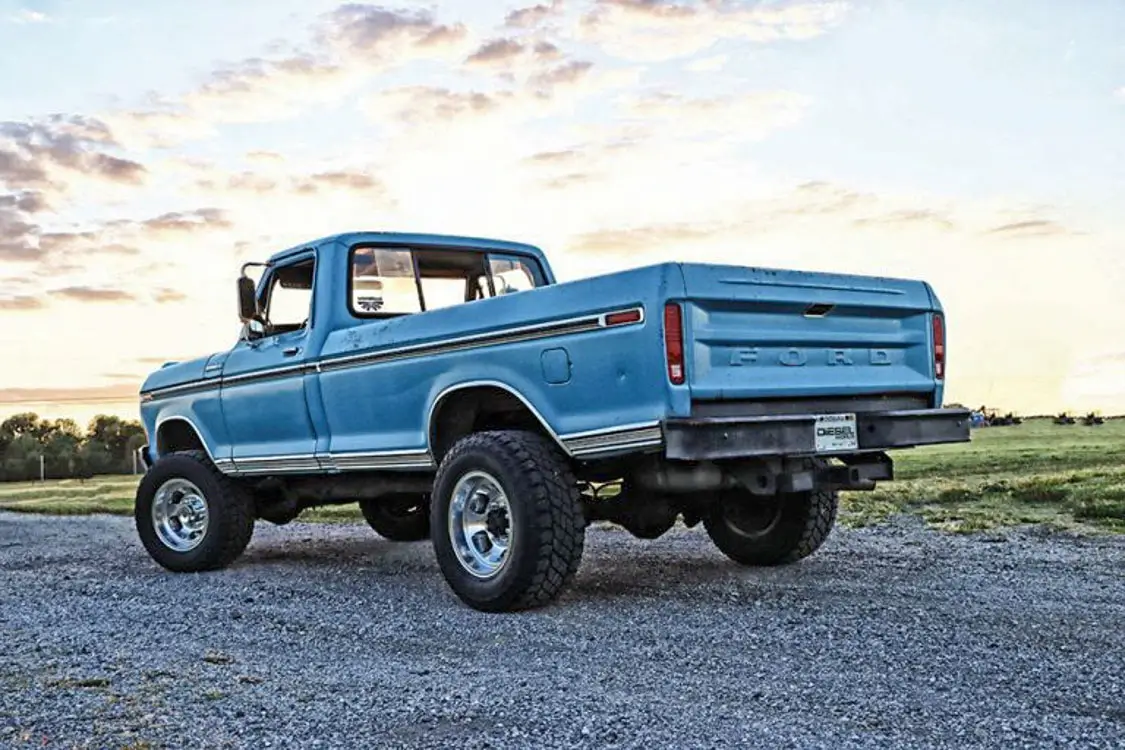
The definitive explainer for F-250, Ram 2500, and Silverado HD owners who keep seeing ‘EGR delete kit’ in every build thread
If you’ve spent any time on diesel truck forums, build threads, or YouTube teardowns, you’ve heard the term EGR delete kit thrown around constantly. For first-time diesel owners, it sounds like something only hardcore race trucks need. For anyone who’s been dealing with a carbon-choked intake manifold or a cracked EGR cooler at 90,000 miles, it’s the modification they wish they’d done sooner.
Here’s the plain-English version: your diesel truck is equipped from the factory with an Exhaust Gas Recirculation (EGR) system designed to reduce nitrogen oxide emissions. It does that by routing a portion of hot exhaust gas back through a cooler and into your intake manifold. The system works for emissions compliance, but the byproduct of cycling dirty exhaust through your intake is carbon buildup, clogged valves, cracked coolers, and eventually, a very expensive repair bill.
An EGR delete kit physically removes or blocks that entire system. It’s one of the most discussed performance and reliability modifications in the diesel aftermarket. For off-road and competition builds, it’s often the first thing experienced builders do before anything else.
The Exhaust Gas Recirculation system has been standard equipment on diesel trucks since the mid-2000s. The concept is straightforward: by recirculating exhaust back into the intake, combustion temperatures drop, which reduces NOx formation. On paper, it’s an elegant emissions solution. In practice, diesel exhaust is dirty, loaded with soot, unburned hydrocarbons, and moisture. Recirculating it through your intake creates a slow buildup of carbon deposits on every surface it touches.
The two most failure-prone components are the EGR valve and the EGR cooler. The valve controls exhaust flow and is the first thing to clog. As soot accumulates on the valve internals, it starts sticking, which triggers fault codes and rough idle.
The EGR cooler is worse. It uses engine coolant to drop exhaust temperatures before the gas re-enters the intake. Over time, the temperature differential causes the cooler’s internal passages to crack, allowing coolant to mix with exhaust gases. That produces white smoke, drops coolant levels, and on platforms like the 6.0L and 6.4L Powerstroke, can cascade into much more expensive failures.
EGR cooler replacement typically runs $300–$1,200 at a shop depending on platform — and on high-mileage trucks, it’s rarely a one-time fix. Many owners replace it once, then again a year later. That pattern is what drives most diesel builders toward a delete when their trucks are no longer under warranty.
An EGR delete kit is an aftermarket hardware package that physically removes the EGR valve, cooler, and associated components from your diesel engine. It replaces those components with block-off plates, sealing every port where EGR hardware was connected, and reroutes the cooling system to maintain proper coolant flow without the EGR cooler in the circuit.
One critical point that trips up first-time buyers: kits are engine and year specific. A block-off plate for a 2013 6.7L Powerstroke will not fit a 2020 6.7L Powerstroke. The EGR system architecture changed across model years on every platform — cooler mounting points moved, port sizes changed, and coolant routing was redesigned. Always match the kit to your exact model year and engine designation before ordering.
After the hardware install, there’s a mandatory second step that some buyers miss:
you need a delete tune. Your truck’s ECU is programmed from the factory to monitor EGR valve position, differential pressure sensors, and cooler temperatures. When those components are gone, the ECU throws fault codes and can put your truck into limp mode. A delete tune reprograms the ECU to stop looking for EGR-related signals, prevents check engine lights, and optimizes fuel delivery for the cleaner, unrestricted airflow the engine is now receiving.
EGR system design varies significantly across the three major diesel platforms. Here’s what matters for each:
Ford Powerstroke (6.0L, 6.4L, 6.7L)
The 6.0L Powerstroke is widely considered the most EGR-problematic of all three platforms, as EGR cooler failure is closely linked to the head gasket failures the 6.0 is notorious for. The 6.4L uses a dual EGR system with both high and low-pressure loops, making it more complex to delete but equally failure-prone. The 6.7L (2011 to present) is significantly more reliable from the factory, but still develops carbon buildup issues over time, particularly on trucks used for city driving or short trips. The 2011–2014 first-generation 6.7L and the 2020+ third-generation trucks require completely different kits.
Ram Cummins (6.7L, 2007.5–Present)
The 6.7L Cummins is considered the most forgiving platform for an EGR delete install — the system is more accessible, and the engine responds well to the modification. The Cummins went through notable EGR architecture changes in 2010 and again in 2013, so kits are grouped by these generation breaks. One Cummins-specific requirement: the throttle valve (also called the intake throttle) must also be deleted or bypassed alongside the EGR, as it works in tandem with the EGR system and will cause problems if left in place.
GM Duramax (LML, L5P, and Earlier Generations)
Duramax trucks from the LMM generation (2007.5–2010) through the LML (2011–2016) are popular delete candidates. The LML in particular has a well-documented EGR cooler failure history. The current L5P generation (2017–present) has improved EGR reliability versus its predecessors but still benefits from a delete on off-road builds. The L5P also requires an ECM unlock for tuning, which adds a step to the process that buyers should account for.
This is the most common question from builders starting a diesel project. An EGR-only delete removes the EGR system while leaving the DPF and DEF systems intact. It’s a viable option for trucks that are still driven on public roads in states where EGR delete enforcement is less aggressive, or for builders who want to phase their build in stages.
A full delete goes further by removing the EGR, the Diesel Particulate Filter (DPF), and the DEF/SCR system in one build. It requires a more comprehensive tune, but it eliminates every emissions-related failure point at once: no more DPF regen cycles, no more DEF fluid, no more forced limp modes from sensor failures.
For off-road competition builds and trucks that will never see a street emissions test, most experienced builders recommend doing the full delete in one shot rather than phasing it. EngineGo diesel all-in-one delete kits bundle the EGR delete hardware, delete exhaust pipe, and a pre-loaded tuner into a single kit. Everything arrives together, every component is confirmed compatible, and the tune matches the hardware from day one. This approach eliminates the common fitment and compatibility headaches that come from sourcing the hardware and tuner separately.
For off-road and competition builds with a proper delete tune installed, the results are consistent across platforms:
Paired with a proper tune, most owners report 20–50 horsepower gains and noticeable torque improvement, particularly in the low-to-mid RPM range where diesel trucks do most of their work.
Not all EGR delete kits are built the same. Here’s what separates quality hardware from the cheap stuff that warps under heat:
EngineGo EGR delete kits for Cummins, Powerstroke, and Duramax are organized by year and platform with fitment callouts on every product page. The company’s catalog covers everything from the 6.0L Powerstroke through the current 6.7L Cummins and Duramax L5P, with kits designed to pair with compatible delete tuners for code-free installs.
The EGR system is a legitimate emissions solution that comes with a real-world reliability cost, especially on trucks over 100,000 miles or trucks doing demanding work. For off-road builds, competition trucks, and any diesel that will spend its life outside of street emissions compliance, a delete kit removes the most failure-prone and maintenance-intensive system on the truck.
Start with the EGR if you’re not ready for a full build. Do the full delete if your truck will never need to pass an emissions test. Either way, pair your hardware with a quality tune. Running deleted hardware without the matching ECU calibration is the only way to turn a clean install into a headache.


Features
The All-New 2014 Chevrolet Silverado and GMC Sierra Trucks Back in 2006, SUVs roamed soccer fields across the nation, so GM started releasing new models… Continue reading
Jason Mulligan . February 09, 2026
Department
QA1 Suspension did the thing we have ALL been waiting for! Full front and rear coilover conversion for 2003-2006 2WD Chevrolet Silverado 1500. Here’s a… Continue reading
Chris Hamilton . June 19, 2025
Department
QA1 is excited to announce the expansion of its classic Mopar suspension line with the asset acquisition of Gerst Tubular Suspension, a manufacturer of coil-over… Continue reading
Chris Hamilton . March 24, 2021
Industry News
Even though our trucks are equipped with all the modern safety tech like collision warning, automatic braking, pedestrian detection and so on, none of them… Continue reading
STREET TRUCKS STAFF . March 05, 2026
Blood Sweat and Gears
Live Broadcast from SEMA 2021 including interviews with parts manufactures, truck owners and industry enthusiasts. We show you just exactly what it feels like this… Continue reading
Chris Hamilton . November 03, 2021
Blood Sweat and Gears
Using a simple grinder to achieve a perfect butt weld.
Adam Johnson . November 15, 2021


We use cookies to enhance your browsing experience, serve personalized ads or content, and analyze our traffic. By clicking "Accept All", you consent to our use of cookies. Visit our Cookie Policy for more info.





Share Link