










 STREET TRUCKS STAFF
.
June 16, 2026
.
Industry News
.
STREET TRUCKS STAFF
.
June 16, 2026
.
Industry News
.
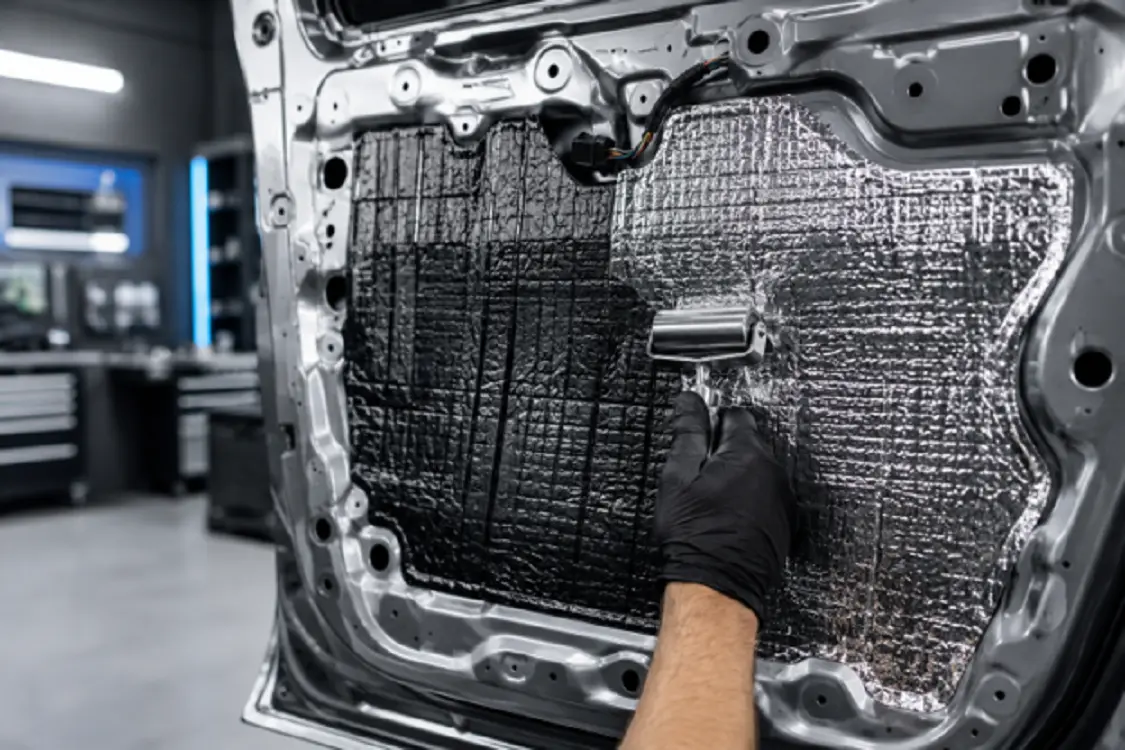
You built or bought your truck to enjoy it. But somewhere between the tire roar at 70 mph, the wind rushing off the mirrors, and the low drone that swallows your stereo, the drive stops matching the truck. A loud cab is not something you have to live with.
With the right approach, you can turn down the noise, manage the heat, and finally hear your music instead of your road, all without changing a thing about the build you love.
Trucks are built to work, and that toughness comes with noise. Large, flat door skins, floor pans, and cab panels behave like drumheads: as the truck moves and the speakers play, those big sheets of metal flex and resonate, generating their own noise and passing road and tire noise straight into the cabin.
Add aggressive tires, a tall ride height, and a roomy cab that acts like an echo chamber, and you get a ride that is far louder than it needs to be. The fix is not a bigger stereo. It is stopping the panels from vibrating in the first place.
Sound deadening treats the source of the problem: panel vibration. Dynamat Xtreme is a patented constrained-layer vibrational damper built from a butyl core and an aluminum constraining layer. When a treated panel tries to flex, the aluminum layer resists stretching, forcing the butyl beneath it to shear. Because butyl is viscoelastic, it resists that motion and converts the vibration energy into a small amount of heat, leaving you with a dead, non-resonant panel and a lower noise floor.
Set realistic expectations going in: this is not about sealing the cab in silence. Most owners report a significant, noticeable reduction in road and tire noise, especially at highway speeds, along with a quieter ride, cleaner audio, and a cab that finally feels refined.
Results come down to coverage. A few scattered patches give scattered results; treating the major panels is what transforms a cab. As you compare sound dampening material, look past price-per-square-foot and weigh what actually drives performance: butyl purity, adhesive strength, and consistent thickness. For most trucks, start with the panels that move the most air and metal:
Dynamat Xtreme is the vibration-damping foundation. For trucks that bake in summer traffic, pairing it with a thermal-acoustic insulation layer adds heat management on top of the quiet, a system approach that treats noise, vibration, and heat together.
Premium sound deadening should earn its place with data. In ASTM E756 testing, the standard method for quantifying a material’s vibration damping, Dynamat Xtreme records an acoustic loss factor of 0.417 at 68°F, a direct measure of how effectively it converts panel vibration into heat before it becomes noise.
The adhesive bonds at room temperature with a peel strength of 42.6 lb./in. on cold steel, so there is no heat gun and no guesswork: clean the panel, peel the liner, and roll it down firmly to form a strong, lasting bond. It is rated to withstand temperature extremes from -65°F to +300°F, meets the FMVSS 302 flammability standard, and is highly resistant to aging.
That is why the principle to remember is simple: buy once, install right.

If you have read mixed reviews, the skepticism is fair. Most of it traces back to partial installs or thin commodity mats that were never engineered for the job. Treat the major panels with professional-grade material and the difference is one you can hear on the very first drive. You are not just chasing quiet; you are getting a more refined cab, better-sounding audio, and a truck that finally matches the work you have put into it. Built for enthusiasts, trusted by professionals: that is the standard worth holding your build to.
How much sound deadening does a truck need?
For a change you will actually notice, aim for full coverage of the major panels: both doors, the floor and tunnel, and the cab back wall, then add the roof if you want to go further. Partial coverage gives partial results.
Do I need to heat the material to install it?
No. Dynamat Xtreme bonds at room temperature. Clean the surface, peel the liner, and press it down with a roller. Just store and apply the material at room temperature for the best bond.
Will sound deadening improve my truck’s audio?
Yes. By stopping the door and panel vibration that distorts output, a treated cab gives your speakers a stable, non-resonant surface to work against, so you hear cleaner, fuller sound at any volume.
A quieter, more comfortable truck does not require a teardown, just the right material on the right panels. Match a professional-grade sound deadener to your truck, treat the cab panel by panel, and turn a loud daily driver into a ride that finally sounds as good as it looks.



Industry News
Once a person is detained for DUI driving, their life circumstances are likely to change significantly. Something as innocent as a traffic infraction can easily… Continue reading
STREET TRUCKS STAFF . June 10, 2026

C10 Builders Guide
The Runner Ups…Get Your Weekly Truck Build Guides - FREE
JONATHAN HAWKINS . October 12, 2021

c10
We talk a lot in this magazine about how to make your truck low, fast and cool. But the argument could be made that we… Continue reading
streettrucks . January 02, 2021

Department
The Right Hardware for Your Hauler Flow into 2019 MagnaFlow has announced its all new Street Series cat-back exhaust for the 2019 Chevrolet Silverado and… Continue reading
Chris Hamilton . September 02, 2019

C10 Builders Guide
airslamit & Level Ride Air Suspension are pleased to announce our first big Instagram giveaway which runs until June 30, 2021. To thank our current… Continue reading
Chris Hamilton . June 23, 2021

C10 Builders Guide
Is your classic ride still sweating it out? Time for an upgrade!In this episode, we take a deep dive into the brand-new Gen 5 Retrofit… Continue reading
Chris Hamilton . April 02, 2025


We use cookies to enhance your browsing experience, serve personalized ads or content, and analyze our traffic. By clicking "Accept All", you consent to our use of cookies. Visit our Cookie Policy for more info.





Share Link