








 STREET TRUCKS STAFF
.
March 26, 2026
.
Industry News
.
STREET TRUCKS STAFF
.
March 26, 2026
.
Industry News
.
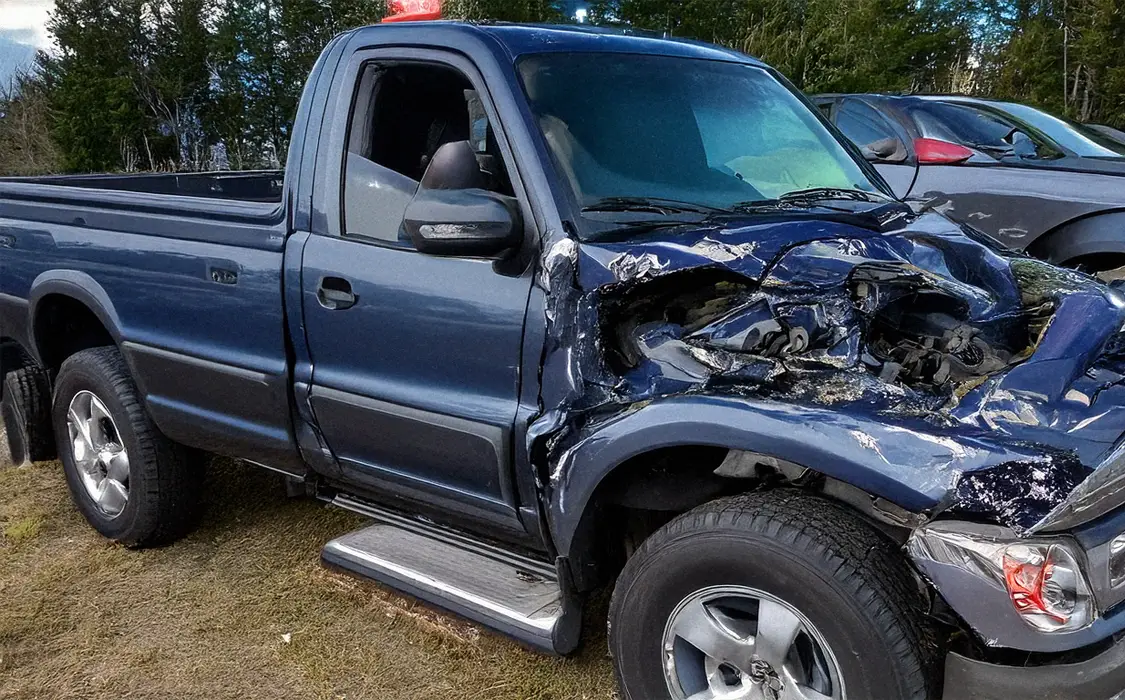
You spent years building it. The suspension is dialed in, the engine has been touched by someone who actually knows what they are doing, and every panel fits the way you want it to. Then someone runs a red light and it is gone in a few seconds.
A totaled custom truck is not the same as a totaled stock F-150 off a dealer lot, and the legal and insurance process that follows is not straightforward. Here is what you need to know before you sign anything or accept a check.
This is where things go sideways fast. When an insurance adjuster declares your truck a total loss, their default move is to pull comparable vehicles from the market: stock, unmodified trucks of the same year, make, and model. Then they offer you a payout based on that number.
If your truck has a built motor, a custom suspension, a one-off bed, or a cab that took three years to finish, none of that is reflected in a stock comp search. The insurer is not trying to make you whole. They are trying to close the file. This is exactly the situation where working with a custom truck accident lawyer can change the outcome. They understand that your build has real, documentable value beyond the factory sticker.
The burden of proving value falls on you. That sounds unfair, but it is the reality of how total loss claims work. The good news is that custom truck owners are often better positioned than they think, provided they have kept records.
Documentation that strengthens your claim:
The more of this you have, the harder it is for an insurer to dismiss your claim with a stock comp. If your truck was professionally built or has been featured in print or online, that documentation adds credibility to the number you are asking for. Insurance companies respond to evidence, not sentiment.
Most standard auto policies pay out actual cash value on a total loss. For a custom build, that is a problem, because ACV calculations are designed around depreciation curves that have nothing to do with the work you put in.
Some insurers offer agreed value or stated value policies specifically for modified and show vehicles. If you had one of these in place, your path forward is cleaner because the payout was established upfront. If you did not, and most people with daily drivers do not, you are negotiating from a weaker starting position.
This is also a lesson for anyone who has not had an accident yet: if your truck has significant custom work, talk to a specialty vehicle insurer before you need to. Carriers that specifically cover modified trucks exist, and the premium difference is worth it.
If someone else caused the accident, you are not just dealing with your own insurance company. You have a claim against the at-fault driver’s liability coverage, and that opens up additional avenues for recovery.
In a liability claim, you can pursue:
At-fault insurers are not going to volunteer the full scope of what you can recover. They will make an offer, and it will be low. Knowing what you are entitled to and being prepared to push back with documentation is how you get to a fair number.
The truck gets a lot of attention after an accident, but if you were behind the wheel and got hurt, your physical recovery matters more. Medical bills stack up fast, and if your injuries affect your ability to work, the financial impact extends well beyond the vehicle loss.
Most states follow a fault-based system, which means the driver who caused the accident is responsible for damages, including your medical expenses, lost wages, and pain and suffering. Those claims run parallel to the property damage claim but are handled separately.
Do not let the focus on the truck cause you to undervalue or delay your injury claim. Get evaluated by a doctor the same day if you can. Even injuries that feel minor at the scene can develop into something more significant over days or weeks, and gaps in your medical record will be used against you during settlement.
The period right after an accident is when most people make the mistakes that cost them later. A few things to keep in mind:
The window right after an accident is when insurers move fast and hope you do too. Slowing down and getting the right advice before you act is how you avoid handing them an easy out.
A custom truck is not just transportation. For a lot of builders, it represents years of work, real money, and something that cannot be replaced with a check based on a stock vehicle comp. The legal system does not automatically account for that. You have to make the case.
Document everything you have. Get an independent appraisal, and before you accept any settlement or sign anything, talk to someone who handles these claims. A conversation costs nothing, and it could be the difference between a payout that covers your loss and one that leaves you starting over from scratch.

Department
Info From an Industry Insider AT THE TIME OF THIS WRITING, WE JUST FINISHED OUR ANNUAL PILGRIMAGE TO THE SEMA SHOW IN LAS VEGAS. We… Continue reading
Jason Ballard . February 14, 2024

Industry News
Deployment orders arrive fast. Between gear, family logistics, and finances, your auto loan probably sits low on the priority list. Ignoring it can cost you,… Continue reading
STREET TRUCKS STAFF . March 16, 2026
c10
Fun Down on the Coast-ish Orange Beach Invasion is one of the most chill and laid-back shows on our event calendar, despite being held at… Continue reading
Mike Alexander . August 18, 2023
Department
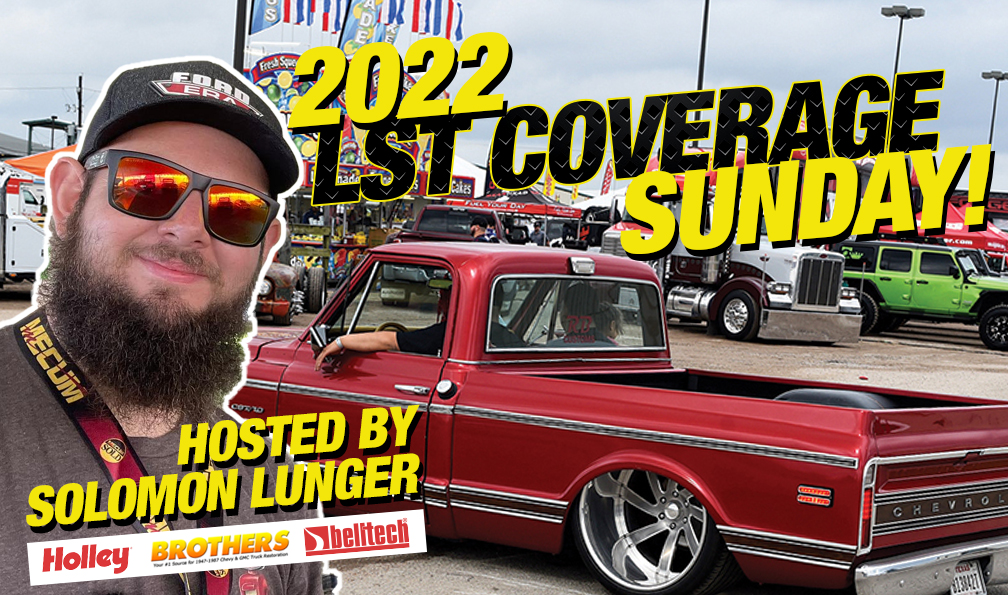
LIVE event coverage from LST 2022! Based in Conroe, Texas, this show just completed its 10th year of excellence and growth. A show that started… Continue reading
Chris Hamilton . February 27, 2022

Industry News
Unveiling of the Tremor Off-Road Package for the 2021 Ford Ranger Ford unveils the Tremor offroading package on the 2021 Ford Ranger midsize pickup. The… Continue reading
Logan Wade . October 14, 2020
Department
A custom shop that specializes in custom suspension, fabrication, and performance modifications. If it goes fast or you want to lay it on the ground… Continue reading
Adam Johnson . April 08, 2022






Share Link