










 Marcel Venable And Jason Mulligan
.
March 20, 2026
.
Features
.
PHOTOS COURTESY OF CHRIS CODDINGTON, DUANE MAYER AND PETE SANTINI
Marcel Venable And Jason Mulligan
.
March 20, 2026
.
Features
.
PHOTOS COURTESY OF CHRIS CODDINGTON, DUANE MAYER AND PETE SANTINI
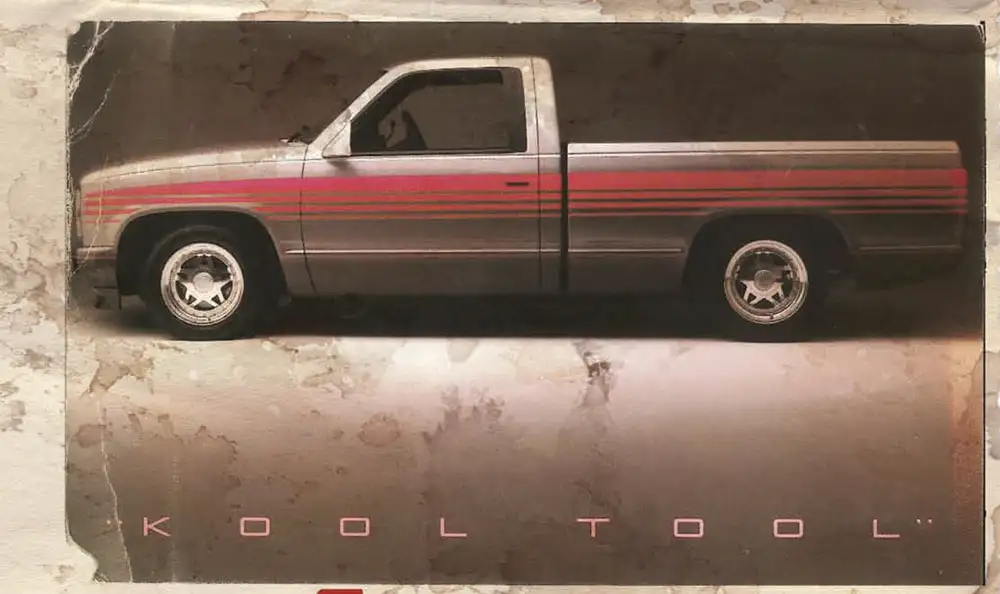
It’s hard to believe that a quarter century has passed since GM unveiled the truck that changed the game and started a movement. Up until then, trucks had only one purpose, work. Their tasks ran the gamut from towing race cars to the track, running parts for your shop, or making a living with one. They were second-class citizens to cars, and were never thought to have style, class, or for that matter, anything other than utilitarian status.
As for fit and finish, they were a joke. The moniker “tractor with doors” was still in salesmen’s vocabulary when dealing with prospective buyers. Nobody knew that in late September 1987 GM would light the fuse to the largest bomb the automotive industry would ever see when the 1988 C/K model was delivered to dealerships throughout America.
The C/K changed the way American consumers looked at trucks and went on to change history. By the time the 1992 model year was rolled out trucks had finally outsold cars for the first time in history, a feat that holds true to this day.
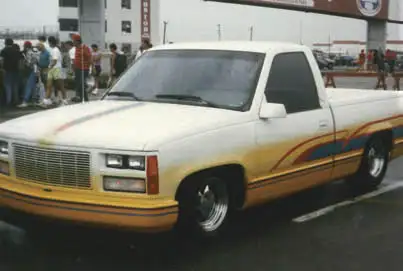
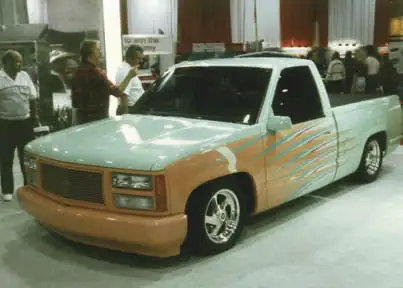
Although GM would like to claim this achievement as entirely their own, that wouldn’t be true. Back in 1987, GM had some help from a few of the “little guys,” otherwise known as a group of southern California customizers. These men saw the diamond in the rough. They took advantage of the refined, clean, aerodynamic style that the C/K offered. The trucks looked new, modern, clean and mean, and because they were great masters of style, they accentuated the C/K in ways that GM never intended.
Gone were the negative stigmas of workhorse, or half a car, which forced manufacturers to take notice and made them reshuffle the pecking order, moving the truck to the front of the line.
Here’s a look at the stories from some of the most influential designers of our time, of our style, of our sport, and what they were thinking when they changed the way people looked at personal transportation. These men created the style that changed the image of trucks. Stay tuned for the next installment showcasing the history of the C/K truck through the builders and companies that created customs.
AMERICAN HOT RODS
Street Trucks: What got you into the truck scene?
Duane Mayer: I saw a truck that Boyd [Coddington] built back in 1981 that really got my attention. Two years later I bought a truck from him and we kept in touch. By ’85, Boyd told me that I should just move out to California, which I had no trouble [doing] ’cause Wisconsin was cold most of the year, so California seemed like a good idea. I asked him, “What am I going to do out there?” and he answered, “Come and work for me.” I thought, “Yeah, that’s possible.” At the time I’d been laid off as a welder at a large paper factory, and I’d had enough of the snow and cold, so in January of ’85 I packed up a little S-10 that I had and drove out to California. The day after I got here I went to work for Boyd.
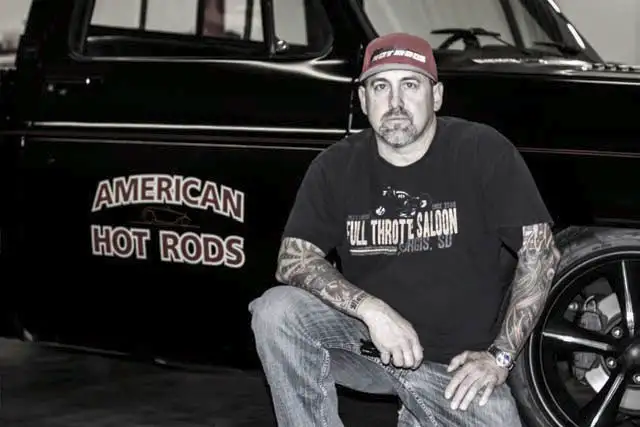
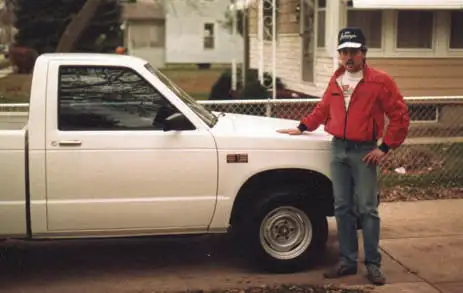
ST: What was he building then?
Duane: Hot rods of course, trucks were just a side thing, I mean Boyd really didn’t care what he built, he just wanted to do it clean and the right way. You know I wanted to build this truck with him back then, and I told him that I’d like to have it red, but then I had to have some one-off, knock-off-style wheels which ended up making the cost of the truck something like $7,500 and I only had a $4,000 budget, which was a lot of money back then. But it was all worth it.
ST: When did you guys get your hands on the first ’88-’98 C/K truck?
Duane: We were building a few of the older square-body-style trucks and a lot of muscle cars for some customers. Boyd had a mid-’80s truck himself that he liked, but when the new ’88 body style came out, everyone had to have one. The funny thing was that Boyd never had one, and for that matter he never really kept anything for too long. I would wonder back then why he didn’t have a bunch of hot rods of his own, but he was like that, always looking to improve. They were just stepping stones to him.
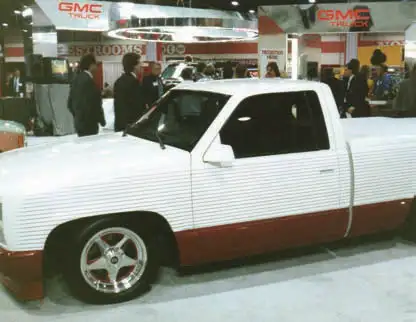
When I was first hired I was cutting glass for all the hot rods, and Boyd even sent me to a guy to learn how to do it. So when the ’88 trucks came out and they took off, he switched me over to doing all of the lowering with another guy named Larry. He was Boyd’s regular suspension guy who designed all the A-arms and flip kits. I’d build and install ’em. Around the middle of ’88 he switched us over from building the muscle cars to just building the trucks for a place called GMC Truck Center.
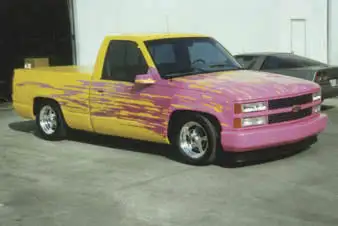
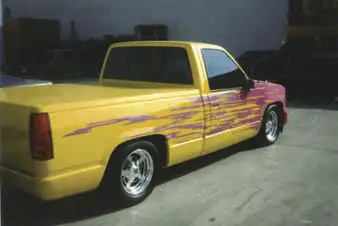
ST: What was GMC Truck Center?
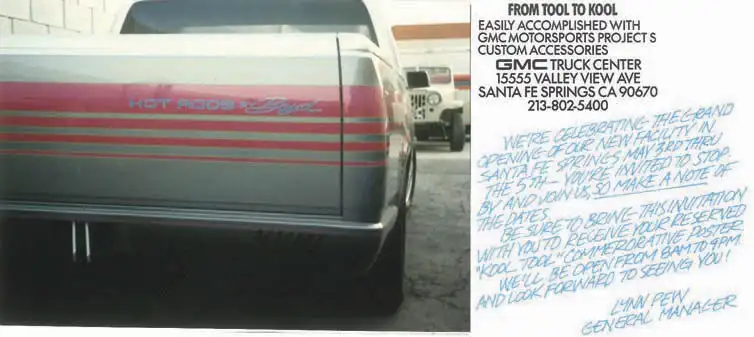
Duane: Well, a guy named Lynn Pew ran the LA Truck Center for GMC, which at the time was the only truck-only dealership in LA. It was a little hole in the wall building in downtown LA, and eventually they opened a big showroom in Santa Fe Springs.
ST: So you guys were taking brand-new trucks from LA Truck Center, customizing them and sending them back where the public could buy them?
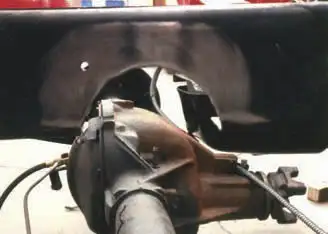
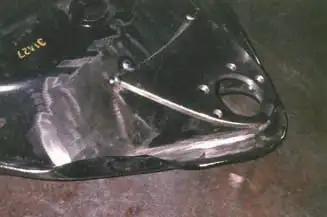
Duane: Yeah, that was the thing, Lynn was a hot rodder, and he had to have everything cool. Like he had to have the top chopped and a custom-made roll pan, and the door handles shaved, he had to have it all. And after we were done with Lynn’s trucks people were coming out of the woodwork, so he said let’s just build them and put them in the showroom. Pretty soon all the dealers had four or five lowered Chevys out on the lot, not all done by Boyd, ’cause by then Bell-tech came around with parts so everyone could do it. But like I said, in the beginning there wasn’t a Belltech spindle kit, everything was hand fabricated, we cut plates and built new A-arms, made frame notches out a 6-inch piece of pipe, stuff like that. Larry was really good at designing things and I loved building them.
ST: How did the billet wheels find their way on the trucks?
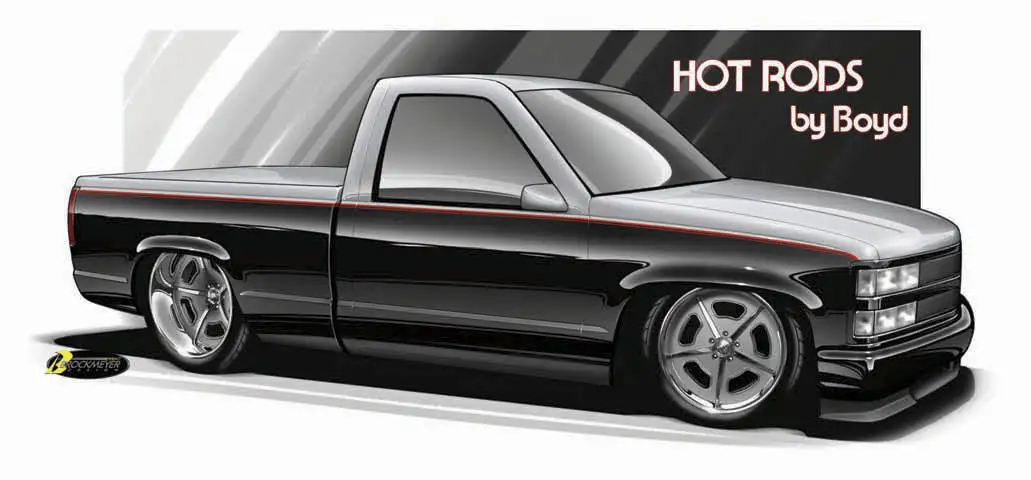
Duane: Alan Budnik came to work for Boyd. He was a kid from San Antonio that was one of Boyd’s best customer’s neighbor. He came to work for Boyd to help out with the machining work. Up until the ’88 trucks the wheels were really only for the hot rods that Boyd built, but back then they thought that the trucks were so popular why don’t we sell the wheels to the public, so the need for the wheels increased. The great thing was that you could order them in the mail and they would come to your house. That’s when they went from knock-off to bolt-on and we tried many different styles of wheel cap designs, but the one that Boyd liked the most was that nex nut look that covered the lugs; that one stuck. Of course, that started a whole big thing where everyone started making wheels. Alan started Budnik, and Al and Bill started Colorado Custom. Pretty soon the market was flooded, but back in the ’80s and early-’90s, Boyd pretty much had the market covered on billet wheels.
ST: You left Boyd to go to work with someone else who was big in the game at the time, what was that like?
Duane: Yeah, Boyd and I had our ups and downs, and we got into an argument over a missing truck that he said that I was in charge of and I knew nothing about. He told me to go home that day to think about it, and the next day I went to work for Bernt Karlsson for about six months. Then Budnik called me and said, “Hey, do you want to go work at this guy’s place lowering trucks?” which happened to be for Tim Sousamiam who owned Trader’s. So I showed him what I did over at Boyd’s, which I did for about a year or so. But what I didn’t like about what they were doing over there, it was too much like an assembly line. I was into making a custom deal for each truck so that they were all a little bit different, and they were the kind of place where it was like, “Put on these mirrors, mud flaps and Trader tops,” where they all looked the same. I was the kind of guy that didn’t like that kind of work. I wanted to do suspension and custom stuff, so I bailed out on Tim, but we’re still good friends today. At the time Trader’s just wasn’t the place for me.
ST: When did Chevy catch on that this was a trend?
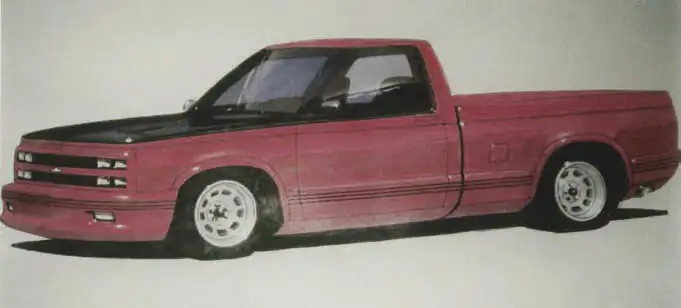
Duane: After Trader’s I went to work at California Street Rods where Chuck Lombardo had a great relationship with GM. Chuck had artists like Steve Stanford, and even Chip Foose, who was still in art school, come by and draw stuff up, and we’d build them for GM to show off at car shows.
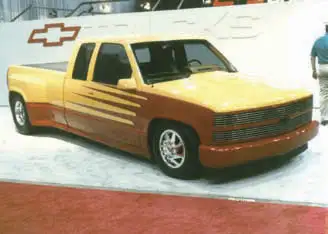
ST: Do you think these guys were making any money?
Duane: Yeah, I think they were. I mean Boyd was making money. He was doing things that nobody else was doing, like modifying the steel roll pans and closing up the tailgate gap that made his trucks look cleaner than the other guys’. Boyd was smart too because he would charge by the hour and not by the job. The other guys that made money were the guys like Trader Tim, where they would do like three to four trucks a day. They would have all of the bolt-on items pre-painted and ready to go, so they had their shop set up like an assembly line.
ST: So you’ve got your own place now (American Hot Rods) and you’re building cars for your clients, but do you have anyone ask to build one of these trucks anymore?
Duane: Yeah, I do, as a matter of fact. I still like those trucks; they have more appeal than even the new trucks. When you get it to sit right, just the stance makes for a good-looking truck. You know some guys got carried away where they put Corvette tail-lights in the roll pan, and that kinda ruined it. It got to a point where everyone was doing it with no taste at all. Then in ’99 when the new body style came out, a few people were doing it but it just didn’t take off like the ’88-’98 trucks did.
I’ve got one customer that I just did a ’90 454 SS truck for, who in 1990 had one, but the stock 454 wasn’t enough, so we put an LS6 454, which was like 450-500 hp that he drove everyday and loved. But one thing lead to another and he sold that truck. He came back in a year ago and said, “I want my truck back.” He’d sold his last one to someone in Japan. So we did another 454 truck that was nicer than his last one. Nowadays it seems that the guy that either had one of these trucks way back when or wanted one of these trucks are building one now.
HOT RODS BY BOYD
ST: When do you remember getting involved with the family business?
Chris Coddington: I remember back when I was about 15 when my Dad first put me in front of a machine. That was just after the wheel business really had took off and the sport truck movement really got going, which shaped my professional life even up until now.
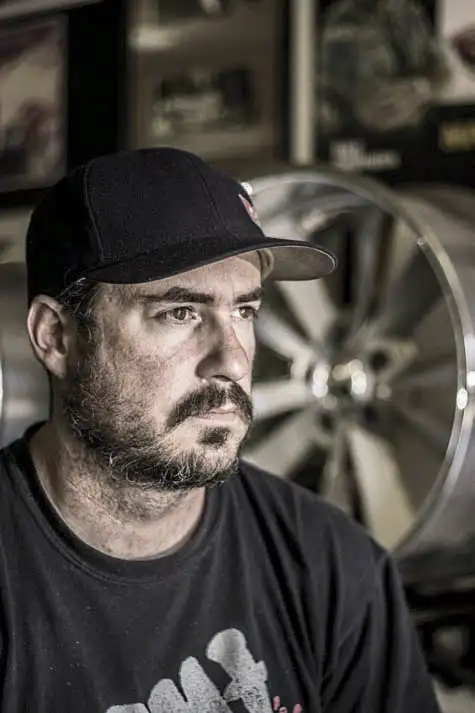
ST: You mentioned the “sport truck movement” which many people credit your Dad and the people who worked at his shop as launching. What was it like to be around the shop at the time?
Chris: It was a cool time. I mean for me, my Dad always had something cool to drive, and in the ’80s it was a Chevy pickup, with a cool paint job and wheels that he made right here in our garage. But for me it was when the new ’88 body style came out is when it got cool since it was new; it was the dawn of made-to-order parts for these trucks, so customizing was easier, and the billet wheel was a big part of that.
ST: Besides wheels, what were some of the other things that Hot Rods By Boyd’s contributed to the look of these custom C/K trucks?
Chris: You know that “Boyd look” was really part of my Dad’s philosophy of less is more, nothing overdone or gimmicky. Slammed on the ground, monochrome look, refined accents were all a product of the time.
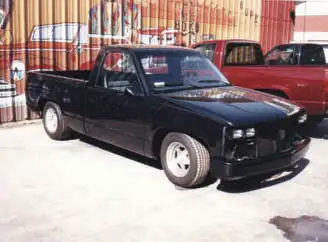
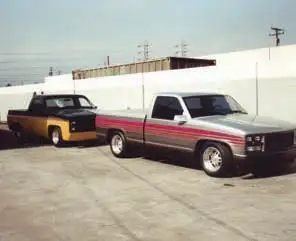
ST: What is your feeling about the ’88-’98 trucks?
Chris: I think it’s a cool body style; it’s probably one of my favorite truck styles. I just think that enough time has gone by that these trucks are ready for a comeback, whereas I think there are some cross-over opportunities with the pro-touring market. These trucks are cheap to buy and make into something fun to drive. I mean, everybody loves a truck.
ST: In the past the trend in wheels has been bigger is better. Do you still see that?
Chris: I think that the big wheel thing is still a big part of the trend, especially in some parts of the country. However, there is a trend leaning towards the pro-touring market. The tire manufacturers dictate a lot of what’s going on as well. We are seeing a lot of orders for smaller wheels, more so than a few years ago. But I see the trend inch or even 18-inch wheels.
ST: How has the past influenced what you’re doing now?
Chris: CNC machining allowed more people to get into the wheel game, which has been great as more and better designs have been made available. My Dad was cool with that; he wanted it to grow. Right now the pro-touring thing is big, but the truck guys are always going to be there, and they have more of a hot rod style to them. Think about it, if you’re a hot rod guy, you’ll always need a truck to haul parts. But I think that the performance wheel is where it’s at right now. Guys are building their cars or trucks to handle and the wheel style reflects that.
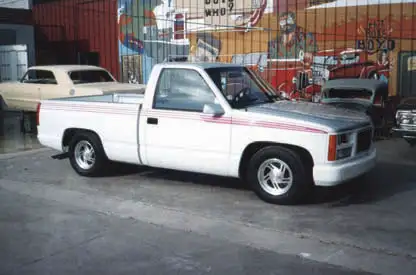
ST: So then suspension stance still plays a major role?
Chris: Yeah, back in the day my Dad worked a lot with Belltech on a lot of projects. That was the first step in making the right combination, after that it’s about the paint and accessories.
ST: Do you see more of these C/K trucks being used as performance vehicles?
Chris: Yeah, look at what guys are doing with cars and trucks now. Car shows like the Goodguys are having autocross events at their shows, or even events like the So Cal Challenge where the show is based around driving. It’s great to see people building their trucks to use for fun, and the ’88-’98 truck is the perfect choice to start with.
ST: Kinda like one hand washes the other?
Chris: Exactly. I mean it’s great to go to a show and see the high dollar builds, but it’s also good to see home-built projects out there driving to the shows, or driving at the shows.
SANTINI PAINT AND BODY
ST: Who were the first guys to bring in the ’88 C/K truck for paint work?
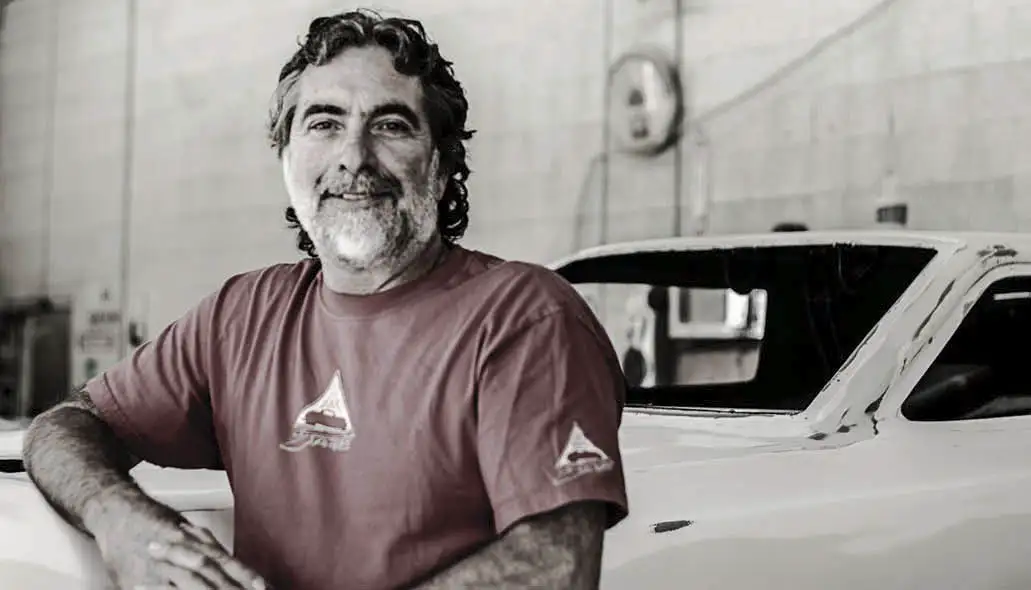
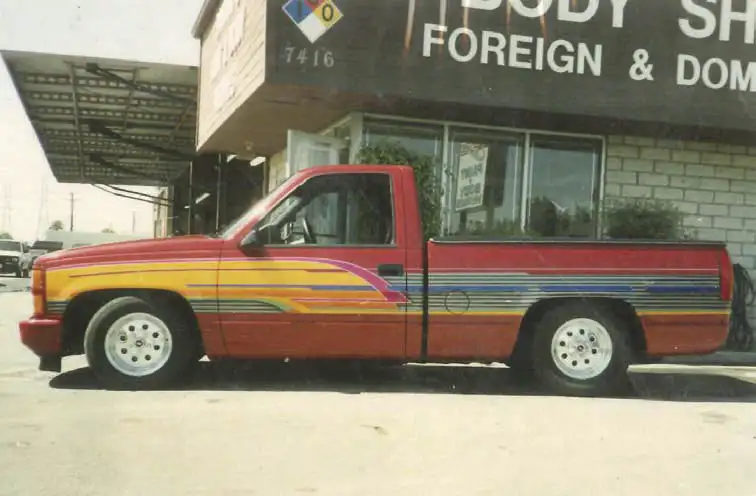
Pete Santini: I had a huge client list of guys that were in construction that had boats that I had painted in the past. When these trucks came out everyone had to have one. Best part was that most of them wanted paint jobs to match their boats. We also did a lot of work for Boyd. At the time he had everyone begging for a truck built by him, or without a doubt, they had to have a set of his wheels. The other guy that I have to give credit to is Bruce McCoy from the Drop Shop out in Chino for what they were doing as well. We did every one of his trucks, which were all cover shots for the magazines because he went all out every time he built something.
ST: Where did you get your influences?
Pete: I was greatly influenced by Billy Carter, and Billy B, as well as Dick Vale. I always loved the drag boat theme and the boulevard scene. I was a big believer in that something starts here and ends there. Craig Fraser once called me a linear graphics painter, and I took it as a compliment. I always try to not be too trendy or too in the moment. I don’t want my customers to wake up three years later and be upset their paint looks outdated. Especially on how much paint jobs are now, and even how much they were back then.
ST: Did they sell?
Pete: Yeah, we did a few of each, but the greatest thing was when we would see copies—poor ones at that—driving down the road. You know the whole imitation is the best flattery thing.
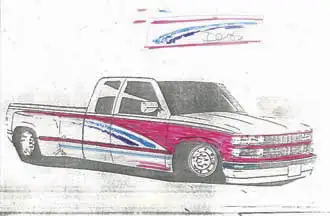
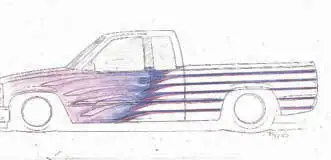
ST: Were the dealerships good to work for?
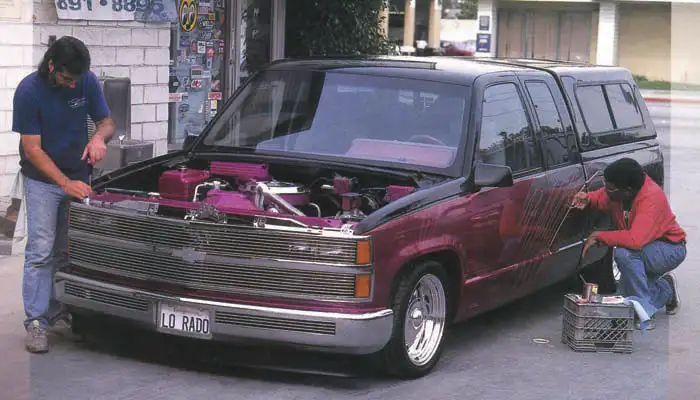
Pete: Yeah, they were all right, and they did bring in extra work because maybe a guy saw one of the theme trucks and wanted something different, or they wanted graphics and we would get the referral from the dealership. Truthfully, the dealerships didn’t really know the game, so I even set up a few of the programs for some of the dealerships around us.
ST: How would you set them up?
Pete: I would contact the parts manufacturers, and get them involved with the dealerships and keep them up to date with the latest trends that people were interested in. We, of course, would still get the job for paint or even sometimes build the whole truck. We were wholesalers for companies like Belltech and Weld Racing, so we would sell the parts to the dealership as well as paint the trucks too.
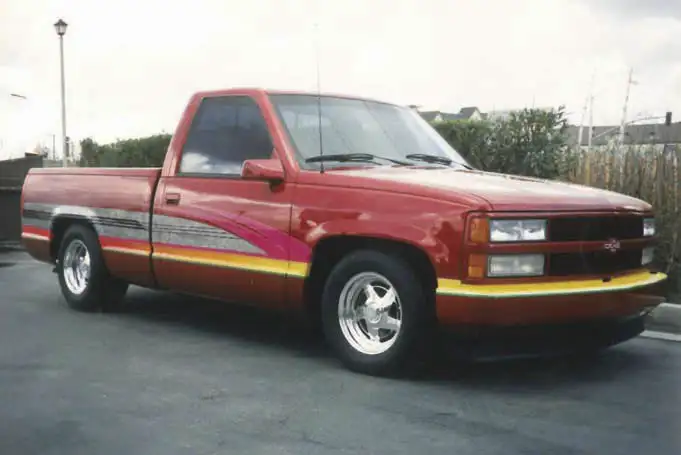
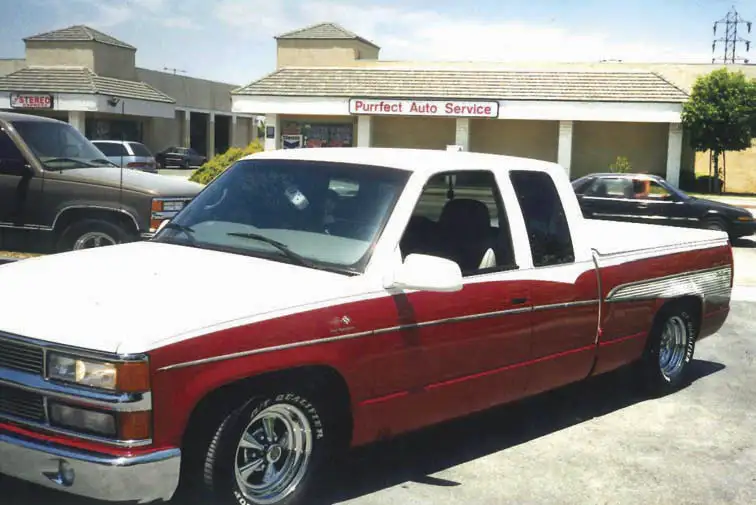
ST: How many trucks were you guys doing back then?
Pete: We looked like a dealership, because the dealers were one thing, but the export to Japan was hot, and demand for that kept us busy, real busy. But I still had to cater to the guys who were setting the trends that kept the Santini name going.
ST: Who were those guys?
Pete: Guys who were going to all the shows, or who had something going on promotion-wise in the area. Magazine projects as well kept rolling in on a daily basis, and everyone was in a hurry. I also couldn’t forget my customers who were going to the river or the Truck Jamboree because they were like my secret salesmen.
ST: The ’88-’98 C/Ks have been called the “me too” custom trucks. What made this possible?
Pete: We touched just about every company’s promotional vehicle this side of the Rockies during that time in some way or another, but the big thing was when the Chevy dealerships came to us and wanted custom-equipped vehicles to sell as new models. That was really what brought attention to these trucks because you could go to any GM dealership and there would be a line of them out front for people to pick from by color, stance, wheel size, standard cab and extended cab, and so on.
ST: Were there some memorable ones that stand out in your mind?
Pete: We had a great relationship with a guy by the name of Wayne Barger from Delillo Chevrolet in Huntington Beach who allowed Steve Stanford and I to design a ’57 Chevy theme as well as a ’62 Impala theme truck.
ST: Where were you getting your ideas?
Pete: I would look at everything going on at the time. I would meet with the customer and pay attention to how he was dressed, what music he listened to, how he talked, and so on. Plus, I kept up on the interests of the times, and I still have the same approach. Everyone that wants custom paint wants something unique and original, so I have to stay unique and original as well.
ST: Is there a truck that stands out in your mind?
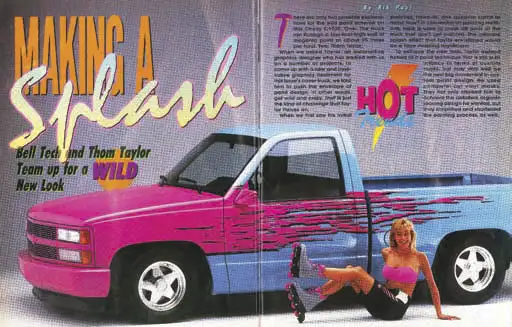
Pete: The one that stands out in my mind really isn’t my favorite, but it really stands out because of the innovation that Thom Taylor and myself did with the computer-generated masks to do these wild, crazy paint jobs that nobody else was doing at the time. The turquoise and magenta truck that was on the cover of Sport Truck back around ’90 or so. That was a big deal because everyone else was using rolls of tape and could never get the same effects that Thom and I were doing with the computer masks. We blew everyone’s mind that year at SEMA. They had to place guards around it because people were picking at it in disbelief that it was painted on.
ST: Do you think that influenced anyone else?
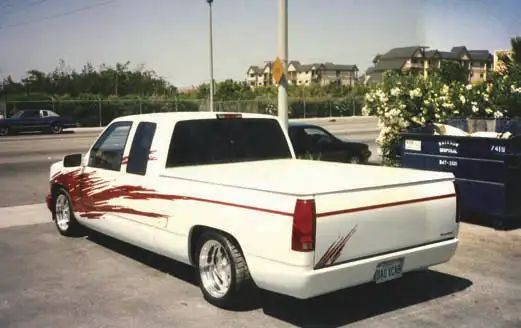
Pete: Maybe, I mean if you look at Craig Fraser and the guys from Bakersfield that came along later with their wild designs. I think that has a lot to do with what Thom and I were doing before them.
ST: Do you think that these trucks will make a comeback?
Pete: I hope so. I don’t think right now. I see most of the younger guys driving around in 3 series BMWs or 5-year-old Lexus’s so I don’t think that the whole slammed truck thing will be as strong as it use to be, but they’re great-looking trucks. They’re cheap, and there’s a lot of them out there. ST
Next month, we follow the story from the early pioneers of the C/K custom game to the parts companies and shops churning out timeless creations.
To see video of the interviews with these legends, visit the Street Trucks website at Streettrucksmag.com
1988
1989
1990
1991
1992
1993
1994
1995
1996
1997
1998
1999
2000
Department
FEATURES Aim High | A Single Cab, Twin-Turbo Skyscraper! Purple Rain | No Regrets with this S10 Sin Cuenta | Laid Out, but Always Ready… Continue reading
Chris Hamilton . June 30, 2020
Department
The Remix When you see a super clean, body dropped truck rolling down the road or sitting at a show, your first thought might be,… Continue reading
Chris Hamilton . August 17, 2023
Features
Jim Stuart’s Stone Cold Custom ’55 Chevrolet Panel Truck WHEN JIM STUART OF ENID, OKLAHOMA, SET OUT TO START ANOTHER CUSTOM BUILD TO ADD TO… Continue reading
Jon Hansen . September 22, 2023
C10 Builders Guide
A Wild Ride Repping Acrophobia With Pride Anytime you ask a custom truck owner why they decided to choose this particular make and model for… Continue reading
Chris Hamilton . November 28, 2023
Features
Time to Vote for Truck of the Year As we roll into 2018, we like to look back at the greatest trucks from the past… Continue reading
STREET TRUCKS STAFF . July 27, 2023
c10
Belltech Celebrates the History of Sport Trucks Looking back at the history of custom trucks, several companies that formed the foundation of the custom sport… Continue reading
C-10 Builder’s Guide Staff . June 08, 2026


We use cookies to enhance your browsing experience, serve personalized ads or content, and analyze our traffic. By clicking "Accept All", you consent to our use of cookies. Visit our Cookie Policy for more info.


Share Link