










 STREET TRUCKS STAFF
.
May 28, 2026
.
Industry News
.
STREET TRUCKS STAFF
.
May 28, 2026
.
Industry News
.
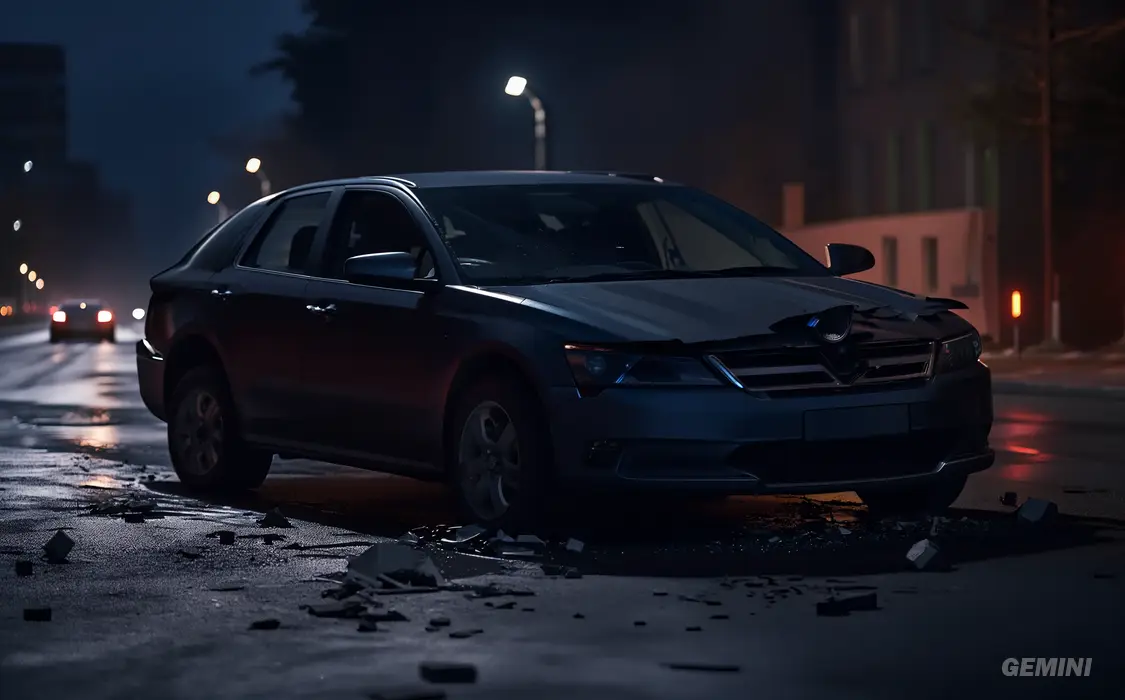
Did you know that 78% of U.S. drivers reported having engaged in at least one aggressive driving behavior at least once in the past year? Such incidents may be treated as more than a typical car accident, where intentional crashes can lead to both criminal charges and civil liability. Victims are left with serious physical injuries and other damages.
With thousands of road rage incidents happening nationwide each year, what do you do if someone intentionally hit you with their car?
Depending on the circumstances, the injured person may be able to pursue compensation for their losses. They can also be awarded punitive damages to punish intentional misconduct.
How does intentional vehicle collision quickly turn a traffic dispute into a serious criminal and civil matter? What are their consequences for victims and drivers alike? Let’s find out!
The driver who uses a vehicle to intentionally hit a pedestrian will face different criminal charges according to the local laws and the extent of the victim’s injuries and the proof of the driver’s purpose. The legal system considers a vehicle used in this manner to be a dangerous weapon, which results in more serious criminal charges.
The police commonly bring charges that include assault with a deadly weapon and aggravated assault and attempted murder when the prosecution can prove the defendant’s intention to kill and vehicular assault under laws that prohibit using a vehicle to inflict bodily harm.
Prosecutors in road rage cases that result in injuries to victims will bring charges for simple assault or battery when the evidence shows that the lesser charges are appropriate. The criminal justice system operates separately from any civil lawsuits that exist.
The prosecutor works for the state instead of representing the interests of the crime victim. A victim who wants to ensure their own financial recovery cannot rely on the criminal case to deliver it. The criminal restitution process, which exists in some cases, fails to provide complete reimbursement for damages. To receive total compensation, a plaintiff must pursue a distinct civil lawsuit.
The use of a vehicle with intentional purpose to hit another person constitutes battery according to civil law. Civil battery requires proof of criminal intent at a higher standard than reasonable doubt. In a civil court, the plaintiff must show that the defendant caused harmful contact by providing evidence that meets the required standard of proof.
The lower threshold establishes an important precedent for cases that become hard to prove through criminal evidence or for cases where defendants achieve not guilty verdicts in criminal trials.
Civil battery claims exist independently from criminal proceedings because they can continue regardless of the outcome of criminal proceedings. A civil judgment can still be issued against a defendant who receives a not-guilty verdict in criminal court. The legal system establishes different requirements for proving cases in criminal cases and civil cases.
As an intentional tort, civil battery allows plaintiffs to claim both punitive and compensatory damages. Most negligence lawsuits do not allow plaintiffs to collect punitive damages. The system exists to punish defendants who engage in malicious behavior or commit extreme offenses while discouraging future violations.
States without damage caps or states with damage caps that do not apply to intentional acts permit punitive damages to exceed actual compensatory amounts. Florida and other states allow unlimited punitive damages when defendants demonstrate specific intent to cause harm.
A civil claim arising from an intentional vehicle strike can pursue the full range of damages that would apply in any serious personal injury case:
According to Sacramento personal injury lawyer Justin L. Ward, you can also claim compensation for your lost future earning potential if a defendant’s behavior caused a permanent disability that has left you completely unable to work in the future.
The majority of victims find this aspect of intentional vehicle strikes to be their most unexpected experience. The standard auto insurance policies provide coverage for car accidents.
Insurance definitions designate an accident as an occurrence that describes an unplanned event. The policy’s intentional acts exclusion typically excludes coverage for any acts that the insured performed with purpose.
Insurers use driver behavior assessment to determine whether to provide coverage or deny it. The driver’s liability insurance will not compensate the victim for damages that result from the claim, regardless of its validity. The victim must then pursue recovery directly from the defendant’s limited personal assets.
The situation depends on the victim’s personal insurance policies, which become essential at this point. Uninsured motorist (UM) coverage applies whenever the at-fault driver does not have insurance or their insurance company refuses to provide protection.
The application of UM coverage to intentional acts depends on state laws and policy wording because courts have produced different rulings on this issue. The victim can access medical payments coverage (MedPay) through their own policy because it remains available regardless of the incident’s circumstances.
If someone commits an intentional act while working for a company through using a company vehicle to threaten a competitor, both the employer’s general liability insurance and the vehicle’s commercial auto insurance will become involved.
The legal analysis requires proof of intent, serving as the essential requirement for assessment.
In this case, there are several pieces of evidence that can be used. This may include the statement of the driver at the scene. You can also collect dashcam or surveillance footage. Witness accounts, prior disputes, and social media or other communications showing intent are other evidence you can collect. Police reports document the officer’s determination of intent. This creates a record that can be used to support the civil case.
Evidence should be preserved immediately. Dashcam footages from nearby vehicles and surveillance videos from businesses must be obtained before they are deleted or overwritten.


Department
The ‘Ultimate’ Heavy Duty GMC Introduces a Luxurious, Advanced, and Capable Sierra HD Led by the first-ever Sierra Heavy Duty Denali Ultimate, the 2024 model… Continue reading
streettrucks . February 10, 2023
Department
The Latest News, Rumors and Changes in the Truck World FCA Announces Sweepstakes Winner FCA US LLC is pleased to announce Michaela Calhoun as the… Continue reading
Mike Self . July 25, 2019
Blood Sweat and Gears
What you need to know “SEMA” taking you right up to kickoff BAJA 1000 EXPERIENCE Location: LVCC North Hall Get Your Weekly Truck Build… Continue reading
Adam Johnson . October 28, 2021
Blood Sweat and Gears
BUILT TO CRUISE EPISODE #20 Hear Jason “ODB” tell the story of his full custom S-10 “Bada-Bing” and how it won the very last Minitruck… Continue reading
Adam Johnson . October 13, 2021

Industry News
CLICK HERE TO LISTEN! Now Playing, OBS Talk sits down with Chris Hamilton and we talk about the Premier #OBS Builders Guide issue. Get Your Weekly Truck… Continue reading
Chris Hamilton . April 09, 2020

Industry News
Photo Source: Bazoom AI Custom truck owners face unique challenges when it comes to road safety. Vehicle modifications can introduce risks that require special attention… Continue reading
ST-STAFF . November 01, 2025

We use cookies to enhance your browsing experience, serve personalized ads or content, and analyze our traffic. By clicking "Accept All", you consent to our use of cookies. Visit our Cookie Policy for more info.




Share Link