










 STREET TRUCKS STAFF
.
May 12, 2026
.
Industry News
.
STREET TRUCKS STAFF
.
May 12, 2026
.
Industry News
.
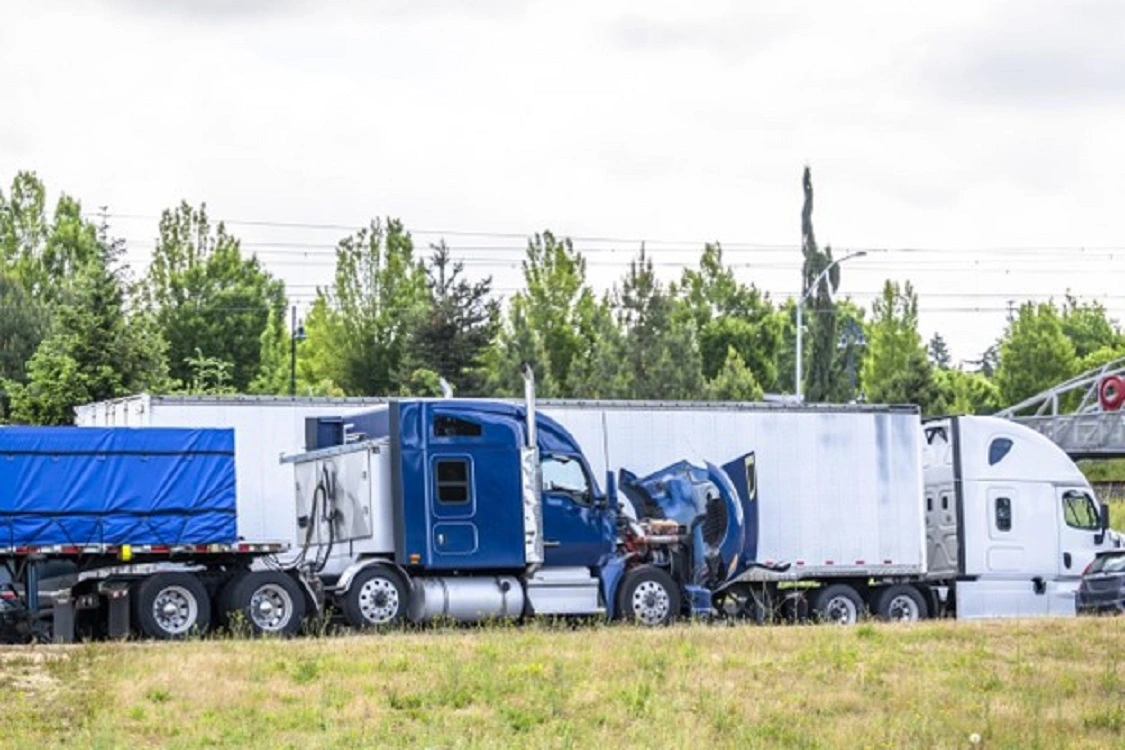
Modern pickup trucks and commercial vehicles pack more horsepower than ever before. The average semi-truck engine now produces between 400 and 700 horsepower, while high-performance pickups regularly exceed 400 hp. For truck enthusiasts, this power translates to impressive acceleration, towing capacity, and overall performance. However, when accidents occur, that same engine power plays a critical role in determining crash severity and the extent of injuries sustained by everyone involved.
Understanding the relationship between engine power and collision outcomes isn’t just an academic exercise. It has real-world implications for road safety, liability determinations, and the legal consequences that follow serious crashes.
The connection between engine power and crash severity begins with a simple physics principle: kinetic energy. A vehicle’s kinetic energy increases exponentially with speed, meaning a truck traveling at 70 mph carries significantly more impact force than the same truck at 50 mph. Research from the Federal Highway Administration confirms that faster speeds increase both the risk of crashing and the severity of injuries that occur.
More powerful engines enable trucks to reach and maintain higher speeds more easily. Between 1985 and 2015, mean vehicle power increased by 65 percent for pickup trucks. This dramatic increase in power-to-weight ratios has real consequences on the road. Studies have shown that a 3-unit increase in horsepower per 100 pounds of vehicle weight is associated with a 38 percent increase in the likelihood of a vehicle exceeding the speed limit by more than 10 mph.
When a high-powered truck strikes another vehicle or object while traveling at elevated speeds, the resulting collision transfers massive amounts of energy. This energy must be absorbed by the vehicles’ structures and, unfortunately, by the occupants inside.
Engine power doesn’t work in isolation when determining crash severity. The combination of mass and power creates the most dangerous scenarios on our roads. Commercial trucks can weigh up to 80,000 pounds when fully loaded, and even lighter pickup trucks typically weigh between 5,000 and 7,000 pounds, substantially more than passenger cars.
NHTSA research has established that mass ratio is the dominant vehicle factor in car-to-truck crashes, contributing more to the odds of fatality in front-to-front collisions than other variables. The basic physics equation of force equals mass times acceleration means that when a heavier, more powerful vehicle crashes into a lighter one, the mass difference multiplies the force exerted on the smaller vehicle.
Heavy truck weights combined with high speeds create what researchers describe as “energies an order of magnitude greater than light vehicle frontal barrier crashes.” Impact energy is considered more meaningful in evaluating crash severity because it accounts for differences in the masses of the striking vehicles. Simply put, a powerful engine that propels a heavy truck to high speeds creates a worst-case scenario for collision severity.
Florida presents unique challenges when it comes to truck accidents. The state’s extensive highway system, major commercial corridors like I-95 and I-75, and year-round tourism create constant heavy truck traffic. Florida’s flat terrain and long straight highways also encourage higher speeds, allowing powerful trucks to reach velocities where crash severity increases dramatically.
The Florida Department of Transportation has documented concerning trends in heavy truck crashes. In incidents involving heavy trucks, 50 percent of fatalities occurred in vehicles that rolled over, and 26 percent occurred in vehicles that caught fire. These statistics underscore how the forces involved in high-powered truck collisions can lead to catastrophic secondary events beyond the initial impact.
Additionally, Florida’s warm climate and frequent afternoon thunderstorms create rapidly changing road conditions. When powerful trucks encounter sudden hazards, whether standing water, debris, or stopped traffic, their high mass and momentum make emergency stops particularly challenging, even with modern braking systems.
When truck accidents result in serious injuries or fatalities, determining liability becomes a complex process involving multiple factors. Engine power and vehicle performance capabilities can become relevant evidence in crash reconstruction and liability analysis. Investigators examine whether a truck’s speed was appropriate for conditions, whether the driver had adequate training to handle a high-powered vehicle, and whether mechanical issues contributed to the crash.
In Florida, truck accident cases often involve multiple potentially liable parties, including the truck driver, trucking company, vehicle manufacturer, and maintenance providers. When these crashes result in injuries, understanding your legal options becomes important. Tampa qualified attorneys can help determine liability factors, including whether excessive speed enabled by high engine power played a role, and navigate the complex insurance claims process that follows serious collisions.
Florida operates under a modified comparative negligence system, meaning even if a truck driver shares fault for an accident, injured parties may still recover damages. However, the severity of injuries in high-powered truck crashes often results in life-altering consequences that require comprehensive legal and medical support.
Engine power in modern trucks represents a remarkable engineering achievement, providing capabilities that serve legitimate commercial and personal needs. The key issue isn’t the power itself, but how it’s managed on public roads. Safe operation of high-powered trucks requires appropriate training, regular maintenance, and responsible driving that accounts for the physics of mass and velocity.
For truck owners and operators, understanding how engine power affects collision outcomes should inform driving decisions. For everyone sharing the road with these powerful vehicles, awareness of their capabilities and limitations can promote safer driving practices and appropriate caution around commercial trucks and high-performance pickups.
The relationship between engine power and crash severity remains an important consideration in ongoing discussions about vehicle safety standards, driver training requirements, and roadway design, particularly in high-traffic states like Florida, where powerful trucks are an everyday presence.



Department
If there was ever any doubt about what the next big thing is, pay close attention. The era of the sport utility vehicle is here.… Continue reading
Adam Johnson . November 24, 2021

Department
AAPEX and the SEMA Show, the two events that make up the automotive aftermarket industry’s premier trade gathering during the first week in November, have… Continue reading
Chris Hamilton . August 30, 2021

Features
With the introduction of the 2021 Broncos, Ford produced a 4-door Bronco for the first time in the model’s history. Engine choices include turbocharged 4-… Continue reading
ST-STAFF . March 03, 2026

Department
Des Moines not only serves as the capital of Iowa, but it’s also the most populous city in the state. When Heidi Henckel and her… Continue reading
Phil Gordon . October 10, 2023

Blood Sweat and Gears
Last of our 4 part of WHAT YOU NEED TO KNOW “SEMA” taking right up to kickoff SEMA ELECTRIFIED Location: LVCC North Hall Get Your… Continue reading
Adam Johnson . October 29, 2021

Department
Vendor Spotlight is on Upholstery by Greg. One of the up and coming upholstery guys in the business. We sat down and interview him about… Continue reading
Adam Johnson . April 26, 2022



We use cookies to enhance your browsing experience, serve personalized ads or content, and analyze our traffic. By clicking "Accept All", you consent to our use of cookies. Visit our Cookie Policy for more info.



Share Link