










 STREET TRUCKS STAFF
.
June 09, 2026
.
Industry News
.
STREET TRUCKS STAFF
.
June 09, 2026
.
Industry News
.
In the United States automotive and commercial vehicle sectors, the evolution of light-duty pickups, medium-duty vocational trucks, and Class 8 heavy-duty commercial vehicles has been defined by a massive shift in powertrain engineering. The decades-long rivalry between manual transmissions (stick-shifts) vs automatic transmissions has moved beyond driver preference, evolving into an engineering battleground over thermal efficiency, torque management, lifecycle maintenance costs, and electronic systems integration.
In the consumer and light-commercial markets (e.g., Ford F-Series, Chevrolet Silverado, GMC Sierra, and Ram trucks), the manual transmission is officially obsolete. Jeep retained a six-speed manual option on the Gladiator pickup for several years, but the primary full-size and heavy-duty configurations from Detroit’s “Big Three” have completely phased out the manual option. High-torque output figures from modern turbocharged diesel and twin-turbocharged gasoline engines forced a universal migration to advanced 8-speed and 10-speed torque-converter automatic transmissions.
Read More: Best GM transmissions for LS engine builds
In the Class 8 commercial sector (e.g., Peterbilt, Kenworth, Freightliner, International), the traditional manual transmission has been heavily displaced. However, it was not replaced by conventional automotive torque-converter automatics. Instead, the market adopted Automated Manual Transmissions (AMTs). Fleet adoption of AMTs across the US logistics network exceeds 90% for new vehicle orders due to regional fuel economy regulations, driver shortages, and automated powertrain optimization.
Understanding the architectural differences is critical for mechanical research:
A manual configuration utilizes a mechanical, dry-disc friction clutch assembly operated by the driver via a floor pedal. Gear changes require the driver to manually move a shift lever to select sliding gears or engage synchronizers. Power delivery is physically interrupted during each shift cycle.
Conventional automatics utilize a hydrodynamic torque converter instead of a friction clutch. The torque converter uses fluid coupling to transfer rotational kinetic energy from the engine flywheel to the transmission pump. Internal gear changes are executed under full load without power interruption using complex arrangements of planetary gear sets, hydraulic valve bodies, and wet clutch packs.
An AMT features the internal structural bones of a heavy-duty manual gearbox utilizing a standard helical gear train and a mechanical dry clutch. However, it lacks a clutch pedal and a physical manual shift lever. Instead, electronic control units (ECUs) command pneumatic or hydraulic actuators to operate the clutch and execute lightning-fast gear changes automatically based on load, grade, and engine RPM.
Historically, manual transmissions were favored for heavy towing because a direct mechanical clutch lockup eliminated power loss. However, modern automatic and automated manual systems are now engineered to handle substantially higher torque outputs than traditional manuals can comfortably support in light-to-medium chassis.
For example, high-output variants of modern 6.7L turbo-diesel engines produce up to 1,200 lb-ft of torque from the factory. Managing this immense twisting force through a manual clutch pedal would require immense physical leg effort from the operator and cause rapid wear during stop-and-go hill starts.
Modern 10-speed automatics (such as the Ford-GM co-developed TorqShift or Allison 1000/2000 series) utilize advanced torque converter lockup clutches. Once the vehicle moves past initial acceleration, a internal clutch inside the torque converter locks solid. This eliminates fluid slippage and yields a 1:1 mechanical link identical to a manual transmission, preventing heat buildup while handling high-input torque.
Read More: 4L65E automatic transmission
Transmission efficiency is a core focus of corporate average fuel economy (CAFE) standards and commercial fleet operating margins.
Manuals are highly efficient because they lack high-pressure internal hydraulic pumps and experience zero fluid-coupling slippage. However, their real-world fuel economy depends entirely on driver behavior. Poor shifting habits, lugging the engine, or delayed upshifts drastically lower fuel economy.
Modern 8- and 10-speed automatics have narrow gear ratios that keep the engine operating within its optimal thermal efficiency band (usually between 1,400 and 2,200 RPM for gasoline, and lower for diesel). The addition of multiple overdrive gears allows long-haul trucks to cruise at highway speeds at incredibly low engine RPM, compensating for the minor parasitic power losses caused by internal hydraulic pumps.
AMTs yield the highest fuel economy metrics in commercial logistics. By combining the low parasitic drag of a manual gearbox with an AI ECU that monitors GPS terrain data, vehicle mass, and wind resistance, an AMT executes predictive shifting. It selects the optimal gear far more accurately than a human driver, standardizing fuel economy across thousands of fleet vehicles.
The financial footprints of these transmissions vary drastically when analyzed across a 250,000-mile (light-duty) or 1,000,000-mile (Class 8 heavy-duty) lifecycle.
While a manual gearbox is cheaper to rebuild or replace structurally, it requires periodic clutch replacements. In heavy-duty or commercial applications, a single abusive driver can burn out a manual clutch in under 50,000 miles. Conversely, while an automatic or AMT is significantly more expensive to replace if a catastrophic internal failure occurs, their integrated electronic limiters prevent drivers from over-revving the engine or executing damaging downshifts, extending the average lifespan of surrounding powertrain components.
In modern vehicle architecture, the transmission is no longer an isolated mechanical component; it is a critical node on the high-speed Controller Area Network (CAN bus).
Manual transmissions are structurally incompatible with advanced safety features. Systems like Adaptive Cruise Control with Stop-and-Go functionality, Autonomous Emergency Braking (AEB), and Predictive Powertrain Control require the vehicle to autonomously manage speed down to a dead stop and accelerate back to highway velocities.
A manual transmission cannot dip its own clutch to prevent an engine stall during an emergency braking event. Because an automatic or AMT can independently control clutch actuation and gear selection via computer commands, they are mandatory requirements for any vehicle platform utilizing Level 2+ semi-autonomous driving systems or advanced active safety suites.
US manufacturers discontinued manual transmissions in light-duty and heavy-duty pickups because modern engines produce torque loads (1,000+ lb-ft of torque) that exceed consumer-grade manual clutch capacities. Furthermore, modern 10-speed automatics deliver superior fuel economy, faster towing acceleration, and integrate seamlessly with mandatory federal safety systems.
An Allison transmission used in medium-duty and heavy-duty US trucks is a conventional hydraulic automatic transmission. It utilizes a torque converter coupled with planetary gear sets and a fully electronic valve body to shift gears under full engine load without interrupting power delivery.
The primary mechanical advantage of an AMT over a standard hydraulic automatic is its high mechanical efficiency. Because it retains the internal design of a manual gearbox, it eliminates the parasitic power losses and heat generation caused by hydraulic torque converters and internal fluid pumps, maximizing fuel economy across commercial transport fleets.

Editor
F-100s are Definitely Here to Stay It’s the beginning of a new era, and it’s starting to come to light to more than just us… Continue reading
Mike Alexander . May 02, 2019
Department
Phil Gordon . July 03, 2024
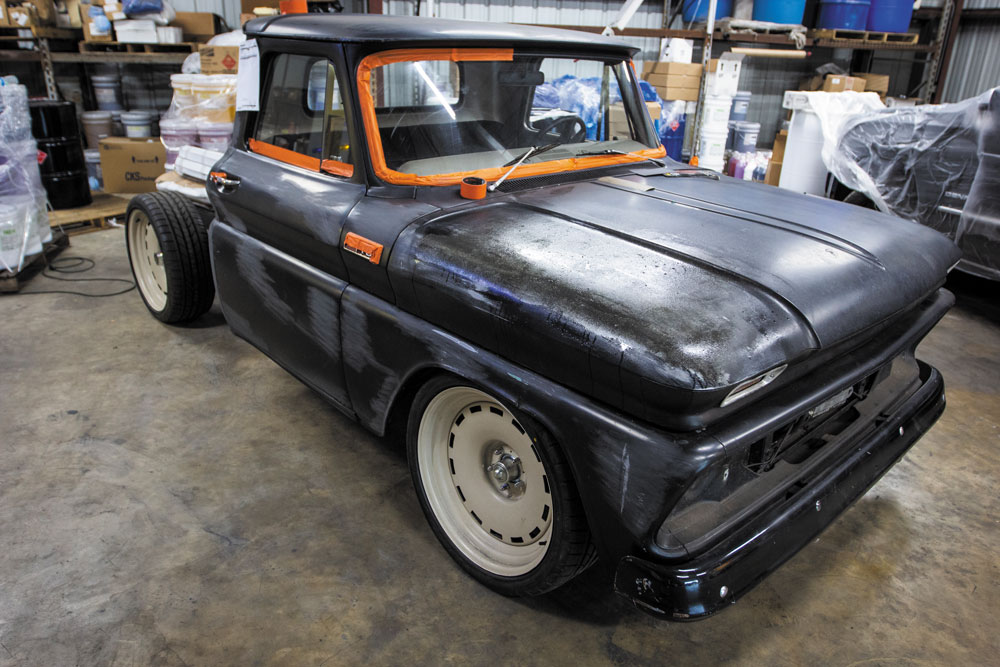
C10 Builders Guide
No one knows everything and everyone learns something. Now let’s get to wrenching! Planning, implementing and completing. That’s the topic of this month’s secular sermon… Continue reading
Chris Hamilton . January 07, 2020
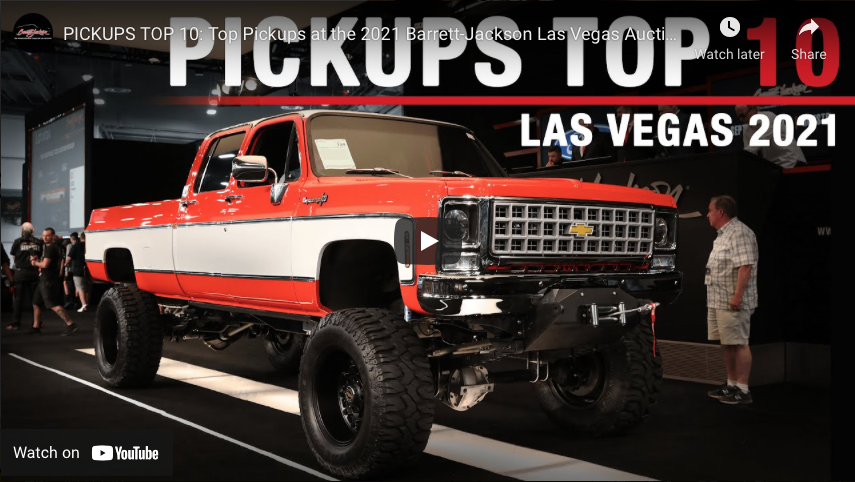
Blood Sweat and Gears
From stock and mild to inventive and wild! The 2021 Barrett-Jackson Las Vegas Auction was home to some of the hottest pickup trucks around. Today,… Continue reading
Adam Johnson . November 08, 2021
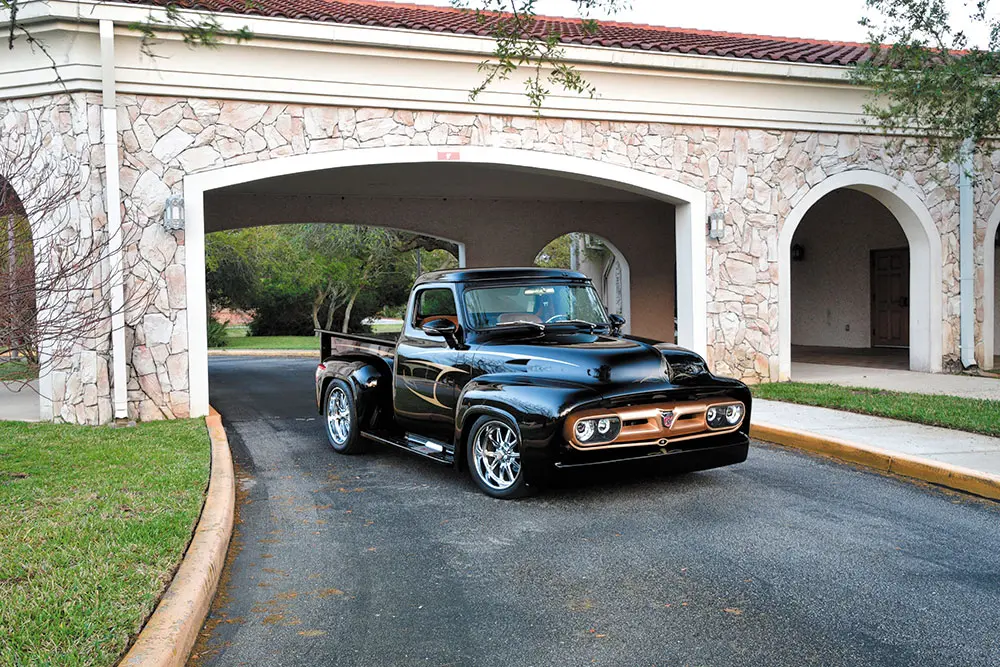
Department
Ken Kerl is the owner of this amazing 1953 Anniversary Edition F-100. A true lover of hot rods and a drag racer in his earlier… Continue reading
Joe Greeves . June 26, 2023

Department
Thanks to Raycon for sponsoring today’s video! Go to https://buyraycon.com/donut for up to 20% off your order today! Trucks are more popular than ever, with… Continue reading
Adam Johnson . November 23, 2021

We use cookies to enhance your browsing experience, serve personalized ads or content, and analyze our traffic. By clicking "Accept All", you consent to our use of cookies. Visit our Cookie Policy for more info.



Share Link