








 STREET TRUCKS STAFF
.
May 21, 2026
.
Industry News
.
STREET TRUCKS STAFF
.
May 21, 2026
.
Industry News
.
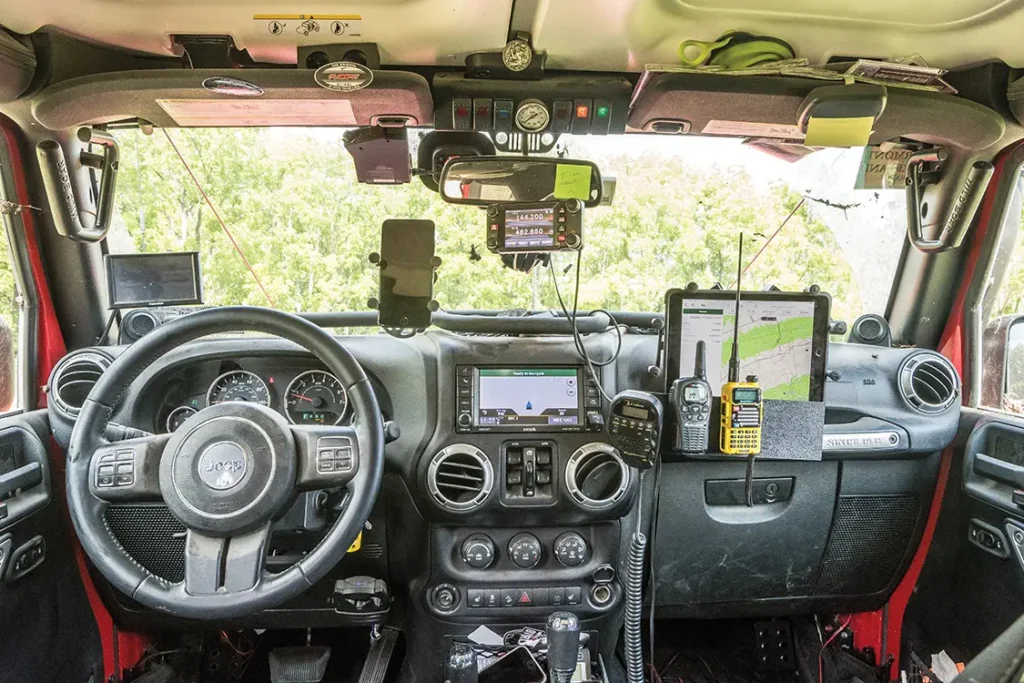
When you’re deep in the backcountry, miles from cell towers and civilization, reliable communication becomes more than a convenience, it becomes a safety essential. Whether you’re running a multi-day overlanding expedition, coordinating a group camping trip, or managing a remote work site in the wilderness, having dependable ways to stay in touch can make the difference between a smooth adventure and a genuine emergency. The challenge lies in understanding which communication tools work best in different environments and how to integrate them into your off-road setup without adding unnecessary weight or complexity.
Modern overlanders and outdoor enthusiasts have more options than ever before, from satellite messengers to two-way radio systems. Each technology has distinct advantages depending on your location, group size, and mission requirements. Understanding the landscape of available tools helps you make informed decisions about what belongs in your rig and what stays home. For those coordinating larger groups or managing operations across extended terrain, systems like repeaters from Motorola represent one category of professional-grade communication infrastructure that extends range and reliability in challenging environments.

The cardinal rule of backcountry communication is simple: never rely on a single system. Cell networks fail. Batteries die. Weather interferes with signals. Experienced adventurers build communication redundancy into their planning the same way they carry spare tires and backup water supplies. This means combining multiple technologies that work independently of each other, ensuring that if one system fails, you still have options.
Most serious overlanders operate with at least two primary communication methods. A satellite messenger provides global coverage and two-way messaging capability, making it invaluable for truly remote locations where no terrestrial infrastructure exists. Two-way radios, meanwhile, excel at short-to-medium range communication and work reliably in areas with challenging terrain, dense vegetation, or urban environments where line-of-sight communication is possible. Personal locator beacons serve as emergency-only devices, designed to trigger rescue operations when situations become critical. Together, these systems create a communication safety net that covers most scenarios you’re likely to encounter.
The key is understanding the operational range and limitations of each system before you head out. Satellite messengers work anywhere on Earth but involve subscription costs and depend on clear sky visibility. Two-way radios offer unlimited communication within range but require line-of-sight or repeater infrastructure. Cell boosters extend cellular coverage in marginal areas but only where some signal exists. Knowing which tool to reach for in different situations prevents panic and ensures you’re using the right technology for the job at hand.
Two-way radios remain the workhorse communication tool for coordinated group adventures, especially when multiple vehicles travel together or when you’re managing operations across a defined area. Unlike satellite systems that charge per message, radios allow unlimited real-time conversation, making them ideal for coordinating vehicle movements, sharing observations about trail conditions, or managing logistics at a base camp.
The choice between VHF and UHF frequencies matters more than many casual users realize. VHF radios operate at lower frequencies with longer-range waves, making them effective for long-distance mobile communications across open terrain and areas with weak cellular coverage. UHF radios, with their shorter wavelengths, penetrate buildings and solid structures more effectively, making them superior in forested areas, canyons, or urban environments where obstacles block direct line-of-sight signals. Most serious overlanders carry dual-band radios capable of operating on both frequencies, providing flexibility across different terrain types and situations.
The practical range of two-way radios varies dramatically based on terrain and atmospheric conditions. In open desert, you might achieve 10 to 15 miles of reliable communication. In heavily forested areas or mountainous terrain, that range might drop to just a few miles. Understanding these limitations prevents overconfidence in your communication capability and encourages you to maintain closer group cohesion or establish predetermined check-in protocols when operating in challenging environments.
Satellite messengers represent a quantum leap in capability for adventurers venturing into genuine wilderness where no terrestrial communication infrastructure exists. These devices use satellite networks to send and receive short text messages, providing a lifeline to the outside world from virtually anywhere on Earth. They’re particularly valuable for expeditions into remote mountain ranges, desert basins, or international locations where cellular networks simply don’t exist.
The primary advantage of satellite messengers is their global coverage and independence from terrestrial infrastructure. As long as you have a clear view of the sky, you can send messages and receive responses. This makes them essential for truly remote expeditions where rescue might require coordination with distant authorities or where family members need periodic check-ins to confirm your safety. Many modern satellite messengers also include emergency SOS functionality that directly alerts rescue services, adding an extra layer of safety for worst-case scenarios.
The trade-offs involve cost, message limitations, and the need for clear sky visibility. Satellite messenger subscriptions typically run between $10 and $20 monthly for basic service, with additional charges for premium features or emergency services. Messages are usually limited to short text, and transmission can take several minutes depending on network congestion. In dense forest or deep canyons, the device may struggle to acquire satellite signals. Despite these limitations, the capability to communicate from anywhere on Earth makes satellite messengers invaluable insurance for serious wilderness adventurers.
The most sophisticated communication equipment becomes useless without a solid plan. Before any adventure, establish clear protocols with your group about how and when you’ll communicate. Determine check-in schedules, establish predetermined meeting points if communication fails, and ensure everyone understands which system to use in different situations. Share your itinerary with someone who isn’t traveling with you, including expected check-in times and the action they should take if you miss a scheduled contact.
Document the frequencies and channels you’ll be monitoring on two-way radios, ensuring all group members have this information written down. Establish a protocol for what constitutes an emergency requiring immediate satellite messenger activation versus situations that can wait for the next scheduled check-in. Test all communication equipment before departing, checking battery life, signal strength, and basic functionality. Nothing is worse than discovering during an actual emergency that your backup communication system doesn’t work as expected.
Consider the physical integration of communication devices into your vehicle setup. Mount radios where they’re easily accessible while driving but won’t become projectiles in a rollover. Store satellite messengers in waterproof cases with quick access. Keep backup batteries for all devices, and consider solar charging options for extended trips. The best communication system is one that’s actually with you and functioning when you need it.
Staying connected in remote environments requires thoughtful planning, equipment redundancy, and realistic understanding of each technology’s capabilities and limitations. Two-way radios excel at coordinating group movements and short-range communication, while satellite messengers provide global coverage for true wilderness expeditions. Personal locator beacons serve as emergency backups, and cell boosters extend coverage in marginal areas. By combining multiple communication methods and establishing clear protocols before you leave, you transform communication from a source of anxiety into a reliable safety system that lets you explore confidently, knowing you can reach help or coordinate with your group whenever necessary.

Department
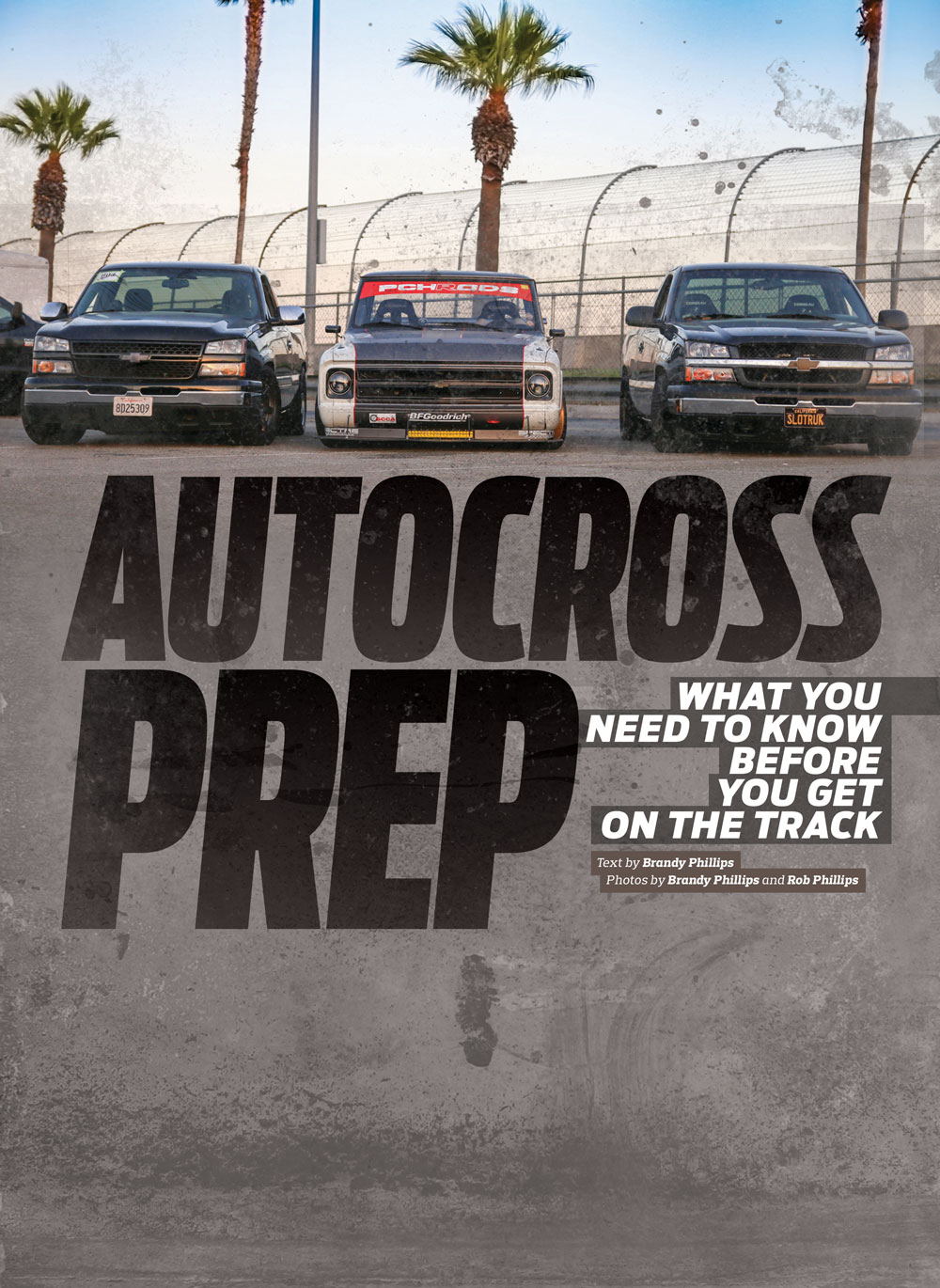
You don’t need a race truck to have fun at an autocross event. It’s common for most first-timers to make very few or no changes… Continue reading
Brandy Phillips . April 09, 2020

Features
This weeks Online Exclusive Feature is Benji Harless’s 1998 Nissan Frontier “Watermelon Crawl. Owner: Benji HarlessSubscribe to our weekly newsletter Truck: 1998 Nissan Frontier Name:… Continue reading
Adam Johnson . December 31, 2021

Blood Sweat and Gears
This story of Austin starts in the Miami beach area where he first cruised the beach on his motorized scooter, modified of course, then on… Continue reading
Chris Hamilton . May 18, 2022

Department
This months Photographer Spotlight is on “Brian Goude”. Brian is one of the premier photographers in the automotive scene. Most of you know him from… Continue reading
Adam Johnson . March 01, 2022

Department
When it comes to custom vehicle shows, location plays a huge role. It sets the scene, draws crowds and can even recreate a time gone… Continue reading
Chris Hamilton . December 07, 2020

Department
Thanks to Factor75 for sponsoring today’s video. Use code DONUT120 to get $120 off Factor at https://bit.ly/3PYCP7m HERE IN MY GARAGE… Curious what we… Continue reading
Adam Johnson . June 20, 2022




We use cookies to enhance your browsing experience, serve personalized ads or content, and analyze our traffic. By clicking "Accept All", you consent to our use of cookies. Visit our Cookie Policy for more info.




Share Link