










 Jeff Anderson
.
February 23, 2026
.
c10
.
JEFF ANDERSON
Jeff Anderson
.
February 23, 2026
.
c10
.
JEFF ANDERSON
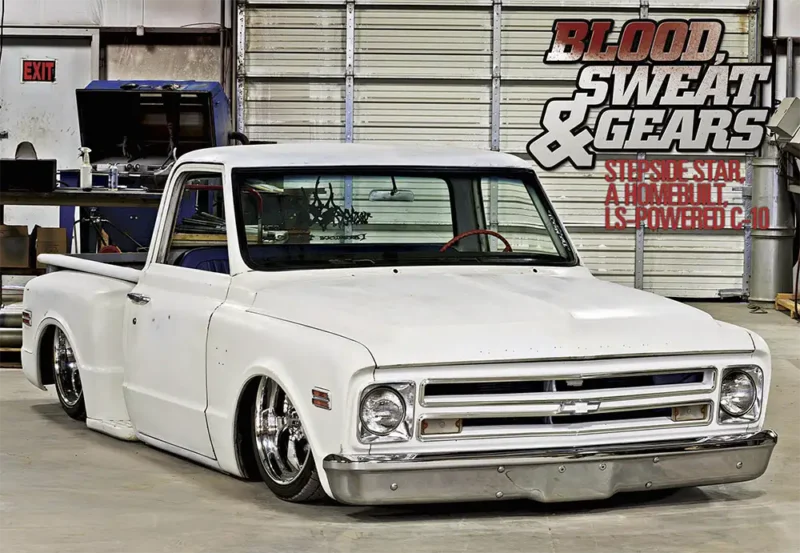
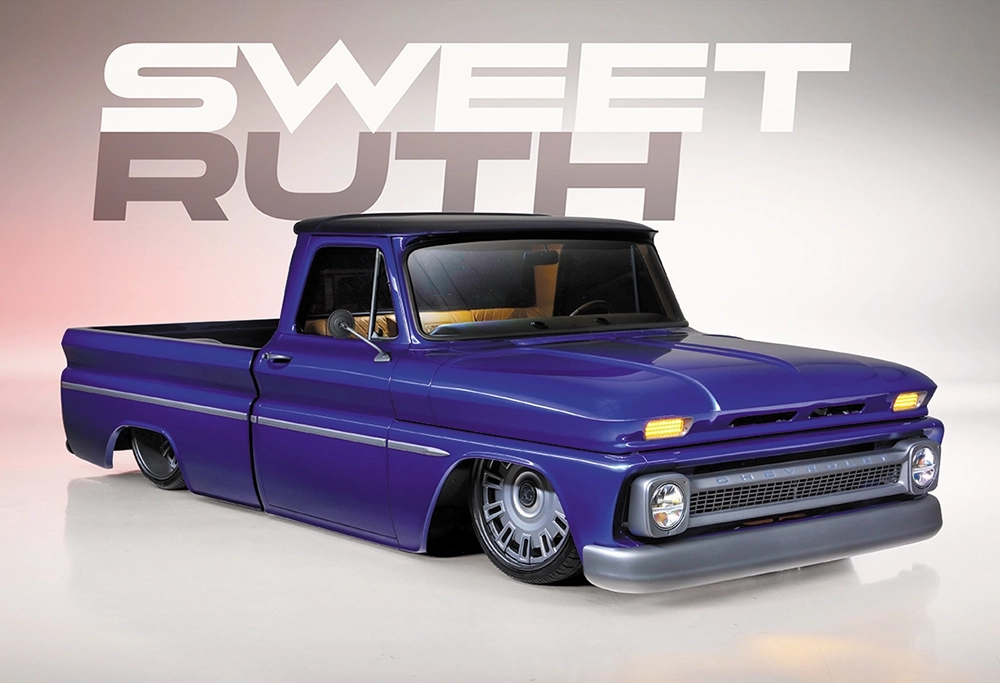
This 1968 Chevrolet C-10 Stepside is a five-year owner-built custom truck project by Cody “Cooter” Cravens of Odessa, Texas. The truck features a 5.7L LS1 V8 engine sourced from a 2002 Pontiac Trans Am producing approximately 305 horsepower, backed by a 4L60E automatic transmission. The suspension has been fully converted to air ride, featuring a Z’d frame, McGaughy’s drop spindles, Ride Tech control arms, and a custom-fabricated 3-link wishbone rear suspension.
The truck rides on 20×8.5-inch front and 20×10-inch rear Bonspeed Quasar billet wheels. The body has received a full body drop to pinch weld level, shaved drip rails, a 1-inch roof skin modification, and a custom Chevrolet script tailgate skin. The build is currently in white primer awaiting final paint.
Cody “Cooter” Cravens has owned his 1968 Chevy C-10 since 1997 when he was in high school. He back then he was more into street rod-style trucks. Cooter changed his tune and got into the custom truck scene in 2001 and joined Nefarious Truck Club. He tried to ‘bag the truck himself, but he wasn’t happy with the outcome, so it sat dormant in his backyard for about four years.
He ended up purchasing a different truck from a fellow club member that had already been ‘bagged in the front, and he ended up learning quite a bit about working on trucks using his new purchase as a guinea pig. With a little knowledge under his belt, Cooter developed a few ideas for the ’68.
Now that he had a nice daily driver, he could afford to get serious with his first truck. He started with the suspension since he now had the skills and the tools, courtesy of the machine shop where he worked.
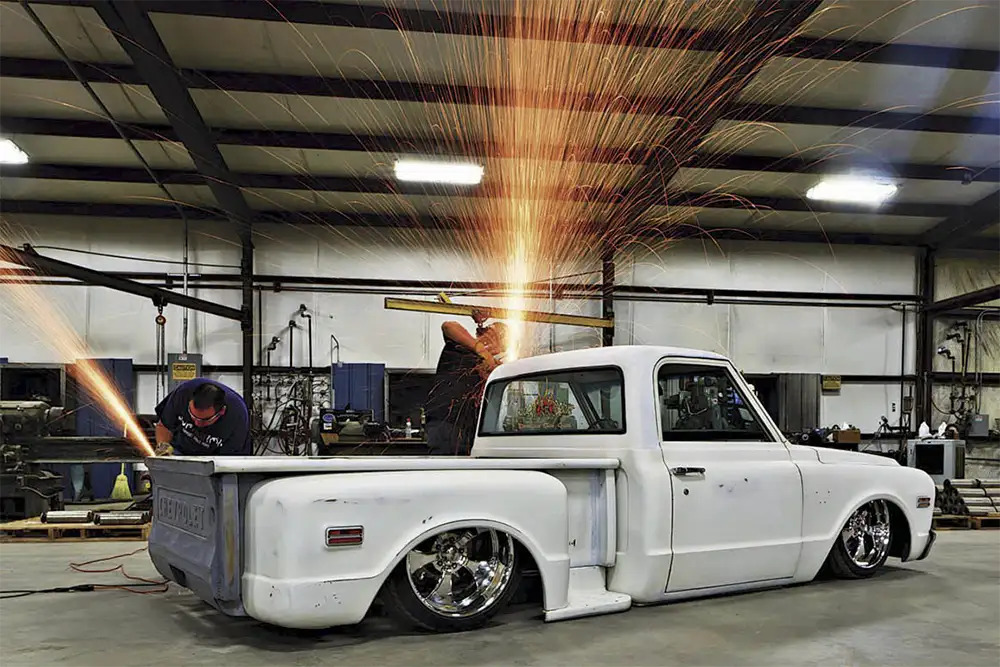
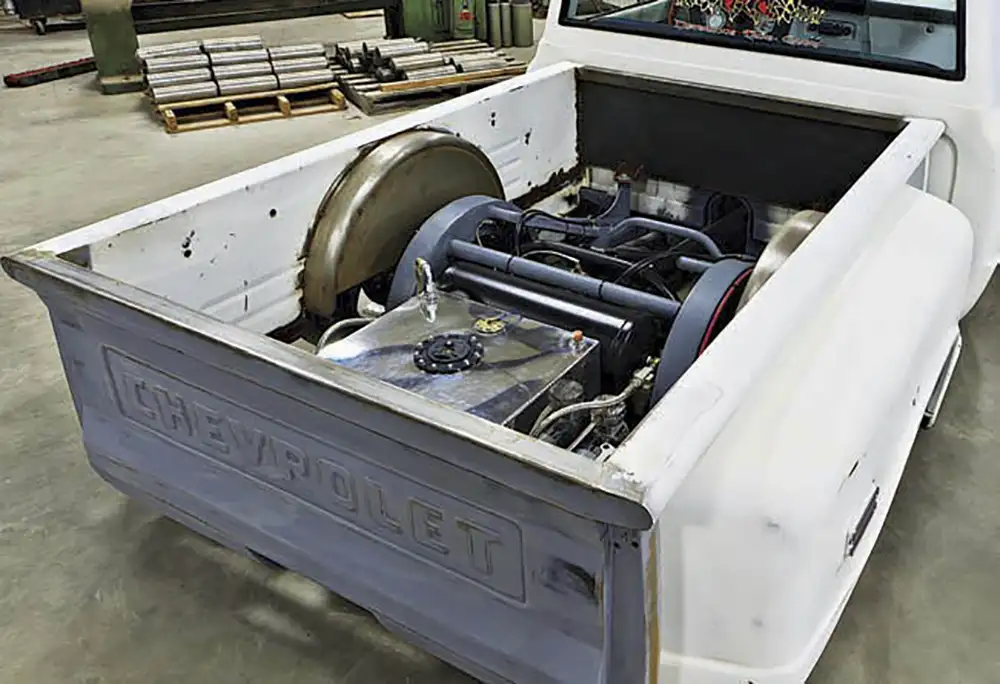
His goal was to build a real clean daily driver. The full build has been chugging along for about 5 years now off and on where he works, interspersed with work on other projects. This time around Cooter started by Z-ing the frame with help from his friend Koolade Randall.
He installed McGaughys drop spindles and Ride Tech control arms and modified the front cross member. The front has been altered to fit a Mustang II rack-and-pinion so that the front can lay out on 20-inch Bonspeed Quasar billet wheels with a decent-size Nitto tire and still be drivable.
Next, Cooter worked his way to the back and crafted a complete back half out of flat plate and 1-inch tubing. Everything was kept in line in the rear with a 3-link wishbone setup with the ‘bags on the bars for the most travel and best ride quality possible. The rearend was narrowed 3 ½ inches with Moser axles and is set up with an Eaton TrueTrac and Richmond 4.10 ring gear.
The body currently wears white primer, but it will eventually receive a simple, clean paint scheme. The cab mounts have been lowered to body drop the truck down to the pinch welds. The drip rails are shaved and 1 inch has been cut out of the roof skin to make the transition from the windshield to the roof more pleasing.
The 1968 C10 has a custom one-off tailgate skin that features the classic Chevrolet script logo. The rear fenders were sectioned and raised 1-inch to accommodate the tires when laid out.
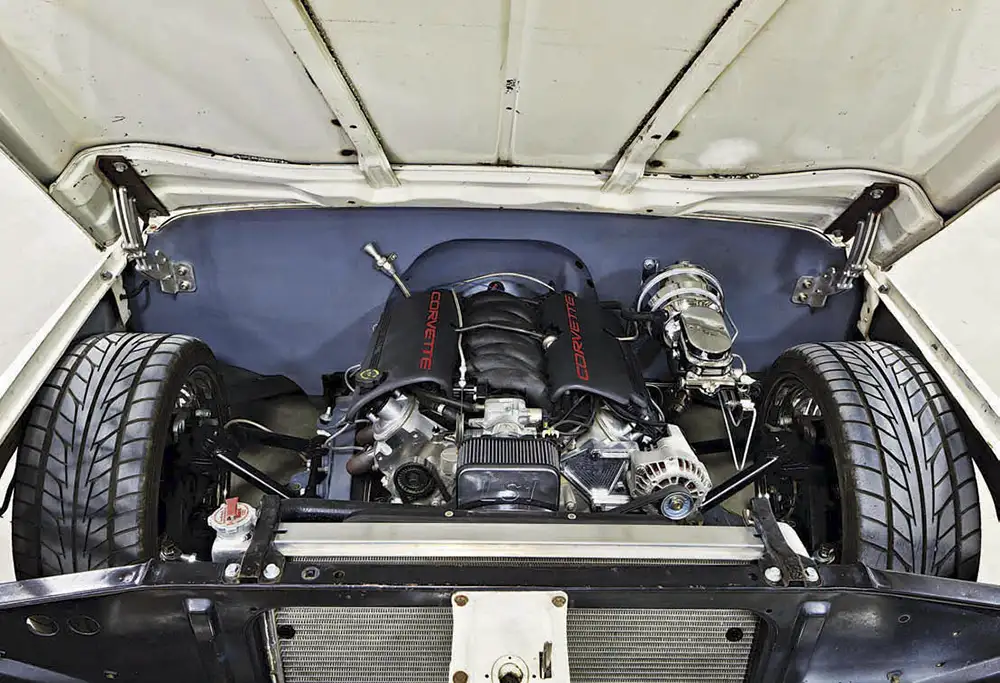
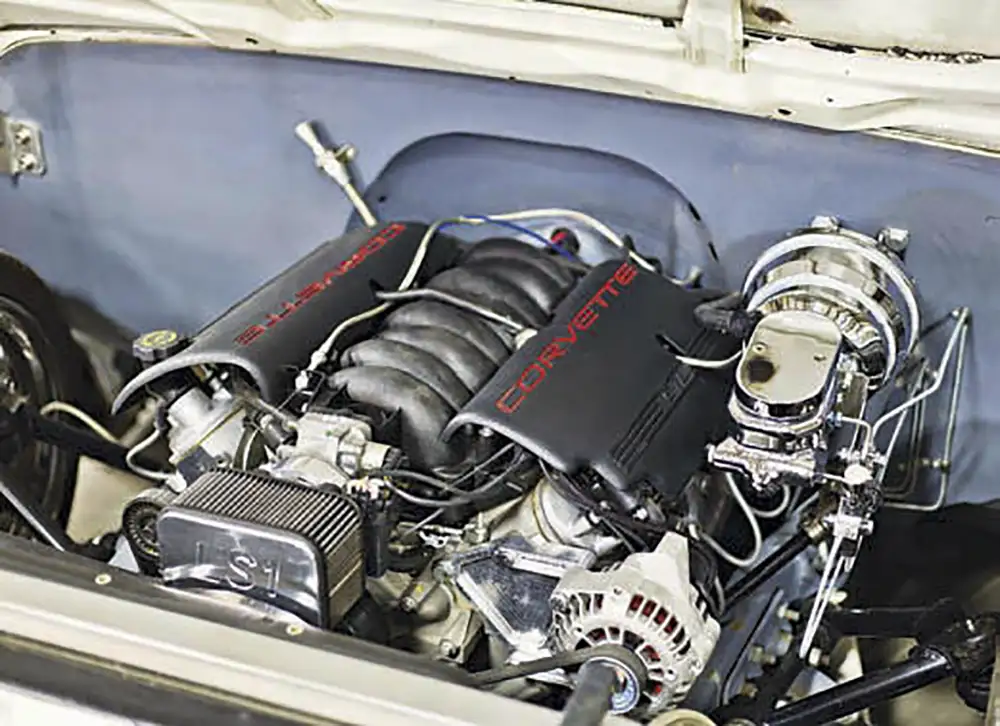
The motor is a stock LS1 5.7L taken from a 2002 Trans Am with a set of Sanderson headers connected to a Flowmaster Hush Power muffler. It’s completely fuel-injected thanks to a Street and Performance wiring harness and custom computer tune.
The engine is backed by a 4L60E transmission from the same Trans Am with a Lokar shifter. Currently, Cooter is about to pull his C-10 back in to the shop to finish it up. He aims to have it completed within the year.
Also Read: An LS intake upgrade is another excellent modification for improving airflow and performance.
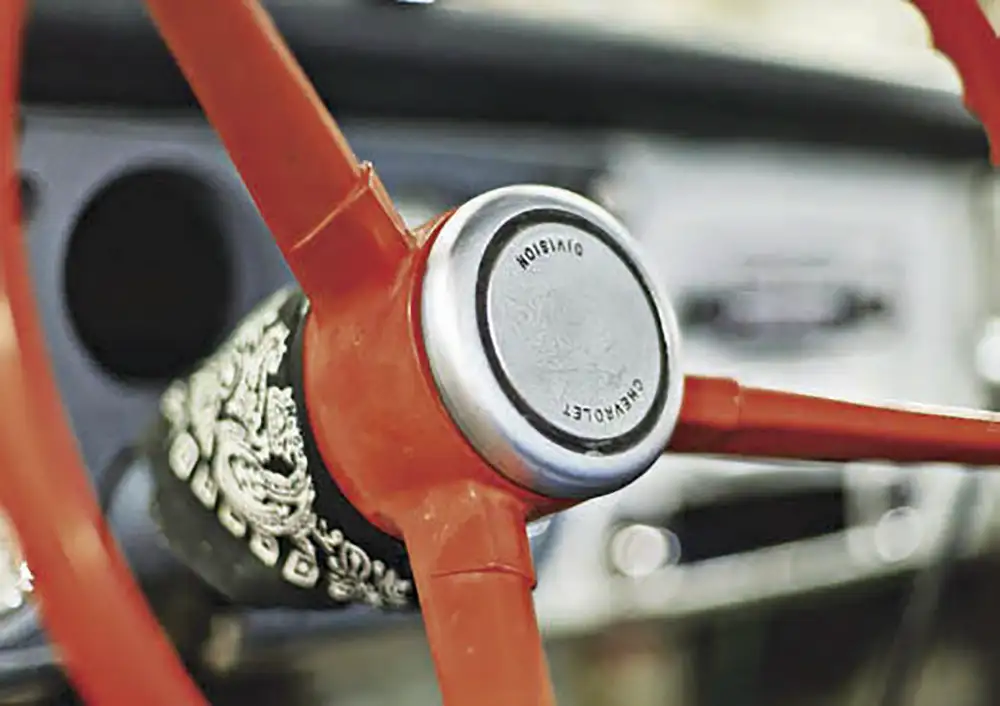
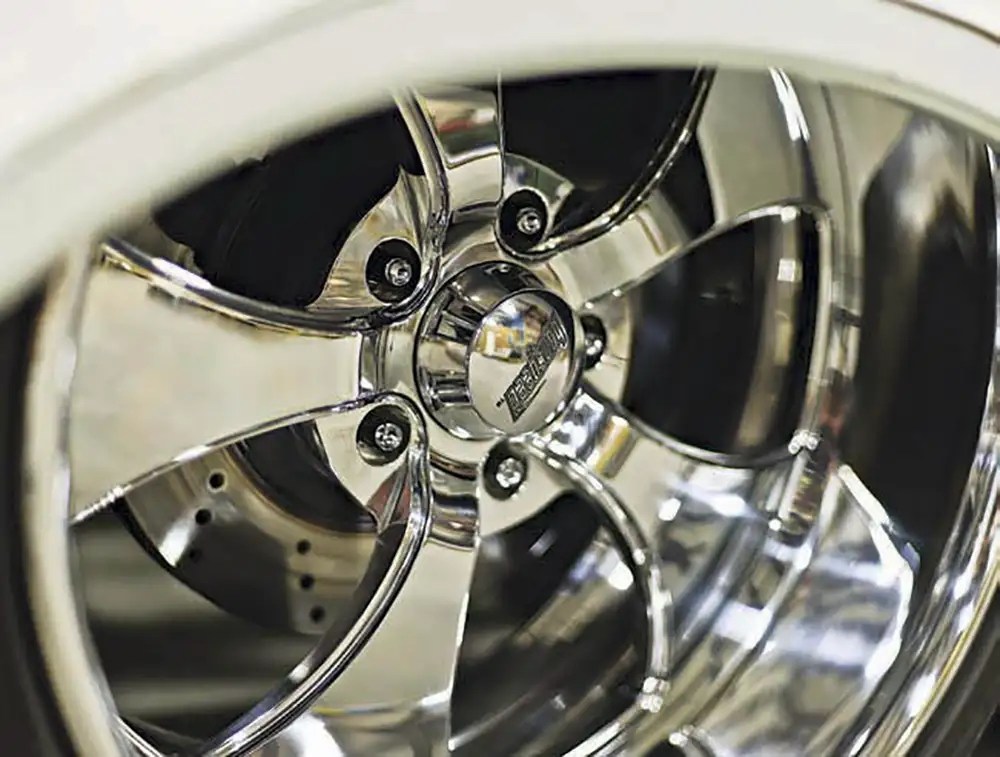
Converting a 1968 C10 to Mustang II rack-and-pinion steering solves a specific problem unique to heavily modified, air-suspended trucks: steering geometry. When a truck is modified to lay its wheels flat on the ground (fully deflated air suspension), standard steering components often bind or create bump steer. The Mustang II rack-and-pinion unit, combined with the modified front crossmember, allows the geometry to remain functional across the full range of suspension travel from full drop to ride height while maintaining predictable, safe steering response.
A 3-link wishbone places the two lower trailing arms and one upper locating arm in a configuration that provides lateral stability without a panhard bar. Mounting the airbags directly on the trailing arms (referred to as “bags on the bars”) means the airbag travel equals the full suspension travel, maximizing the distance the truck can drop and rise without the limitations of a remote bag mount. This setup is a preferred configuration for custom trucks that need to lay out fully flat while remaining comfortable at cruise height.
The Richmond 4.10 ring-and-pinion gear ratio was selected to complement the LS1’s power characteristics with the 4L60E transmission and 20-inch wheel diameter. Larger-diameter wheels effectively raise a vehicle’s final drive ratio, making acceleration feel sluggish. A numerically higher gear ratio like 4.10 compensates for this, restoring responsive acceleration without requiring engine modifications.
The Eaton TrueTrac is a helical gear limited-slip differential that distributes torque to both rear wheels without the clutch packs found in traditional limited-slip units. This means it requires no maintenance (no friction modifier additives), provides progressive torque transfer (it doesn’t “lock” abruptly), and works smoothly in daily driving conditions aligning with the owner’s goal of building a genuine daily driver rather than a race or show truck.
CODY “COOTER” CRAVENS
1968 CHEVROLET C-10
ODESSA, TX
NEFARIOUS TRUCK CLUB
This 1968 Chevy C10 uses a stock 5.7L LS1 V8 engine sourced from a 2002 Pontiac Trans Am. The engine retains factory fuel injection, managed through a Street and Performance wiring harness and a custom ECU tune. Exhaust flows through Sanderson headers into a Flowmaster Hush Power muffler.
The LS1 is backed by a 4L60E automatic transmission also sourced from the same 2002 Pontiac Trans Am donor vehicle. The shifter has been replaced with a Lokar unit for a cleaner interior installation.
The front suspension uses McGaughy’s drop spindles, Ride Tech control arms, and a modified front crossmember to accommodate a Mustang II rack-and-pinion steering conversion. The rear suspension is a fully custom-fabricated 3-link wishbone setup using flat plate and 1-inch tubing, with airbags mounted on the trailing arms for maximum travel and ride quality.
Z-ing the frame refers to cutting and reshaping the main frame rails in a Z-pattern, allowing the vehicle to sit lower while maintaining adequate clearance for the drivetrain and suspension components. On this C10, the frame was Z’d to achieve a lower overall ride height as part of the air suspension build.
The rear axle has been narrowed by 3.5 inches and fitted with Moser custom axles. The differential uses an Eaton TrueTrac limited-slip unit paired with a Richmond 4.10 ring-and-pinion gear set.
The build has been in progress for approximately five years on an intermittent schedule, with work occurring between other projects at the shop where the owner works.


c10
Another Home Run When you’ve got it, you’ve got it. And when the world around you doesn’t know you’ve got it, you show them you’ve… Continue reading
Mike Self . September 05, 2023
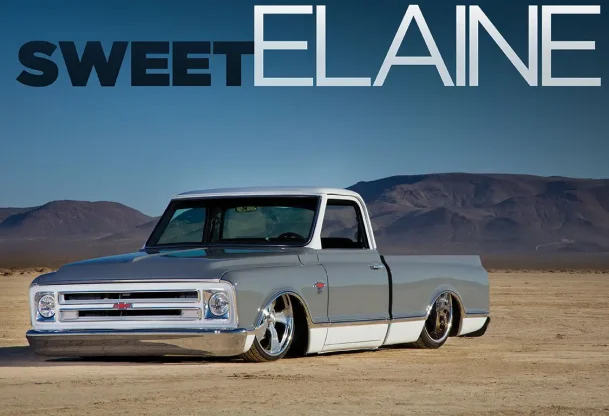
C10 Builders Guide
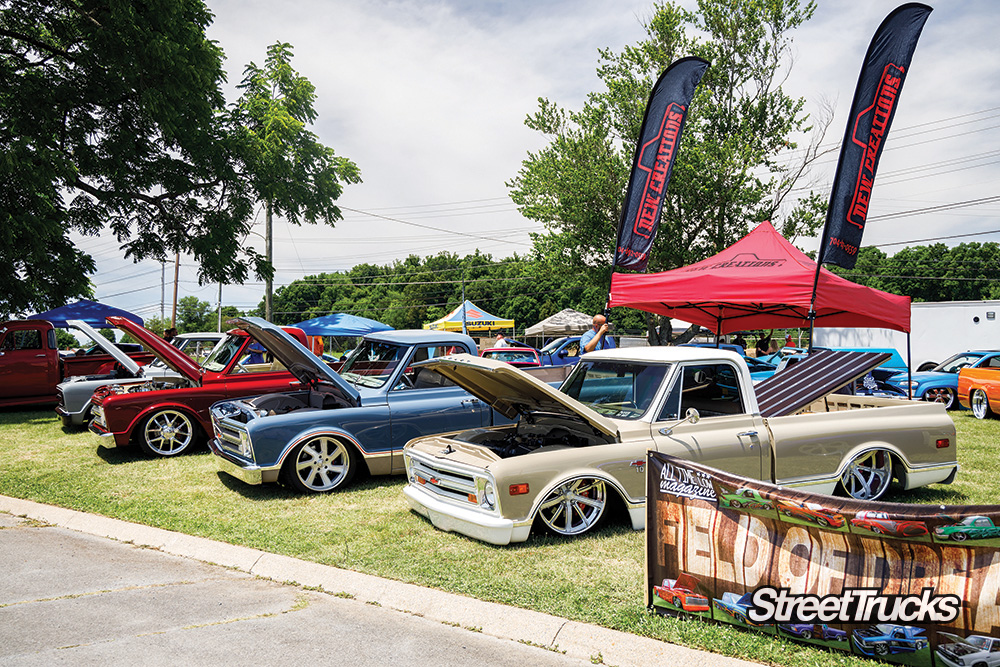
There are certain things that give our lives purpose. No matter what life throws at us, these “things”—whether they’re people, places or objects—give our lives… Continue reading
streettrucks . January 16, 2024
C10 Builders Guide
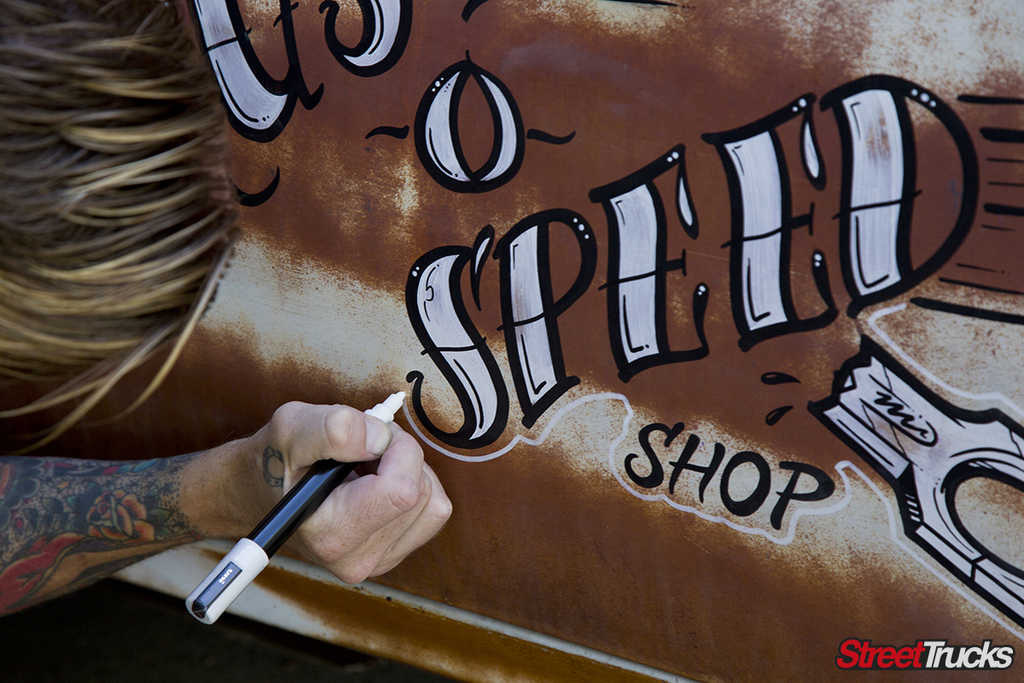
East Tennessee Showdown presented by Direct Paintless Dent Repair was held in June at East Tennessee Distillery in Piney Flats, Tennessee. This one-day event is… Continue reading
Adam Johnson . October 18, 2021
C10 Builders Guide
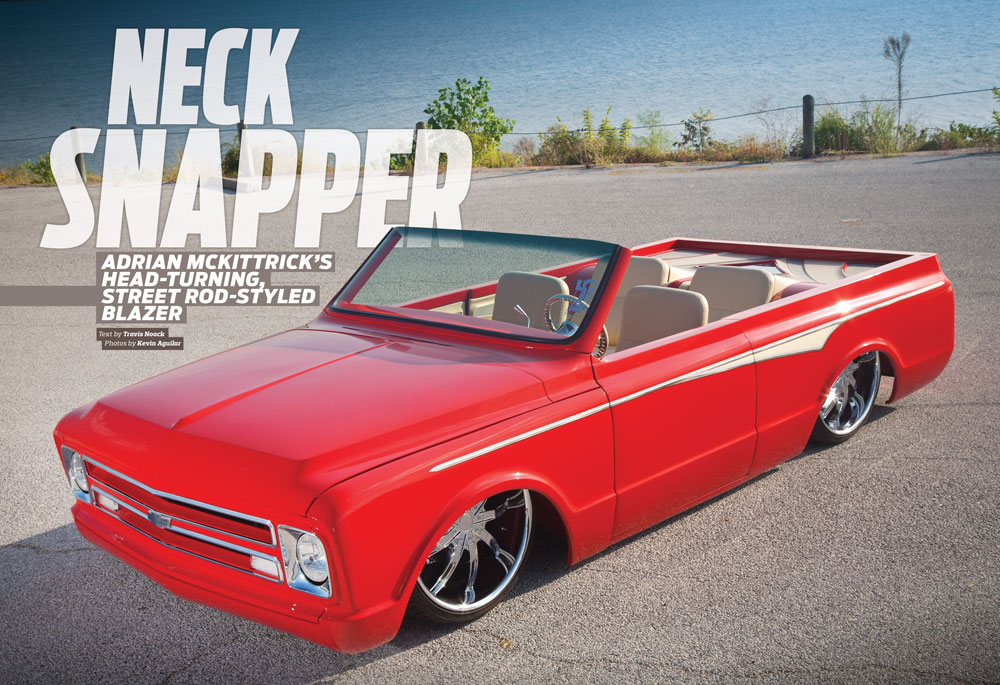
Trucks with patina are certainly rad, but patina trucks with old-school sign work are even better. Most of us can agree that these classic trucks… Continue reading
ST-STAFF . January 21, 2020
C10 Builders Guide
ADRIAN MCKITTRICK’S HEAD-TURNING STREET ROD-STYLED BLAZER FOR MOST OF US, the path to owning, building and showing custom trucks was paved by someone we looked… Continue reading
Travis Noack . May 18, 2020
C10 Builders Guide
Patina Paradise Redefined Jay Church, a name well-known in the automotive industry, has graced the pages of numerous magazines, which have included his two cover… Continue reading
Mike Alexander . December 10, 2024


We use cookies to enhance your browsing experience, serve personalized ads or content, and analyze our traffic. By clicking "Accept All", you consent to our use of cookies. Visit our Cookie Policy for more info.


Share Link